Every mission.
A lasting chapter.
Launch was only the beginning. Follow the arrivals, experiments, discoveries, and final signals that gave these objects a place in history.
Shape your journey
The moments that mattered.
37 of 37 events 8 objects
Oldest first. Open a milestone for its story, archive imagery, and sources. Shared mission events appear once for each associated object, so no object's history is hidden.
Moon Apollo 11 Apollo 11 reflectorApollo 11 launchesLaunch
The reflector travels to the Moon with Eagle and the Apollo 11 crew.
Dates are UTC. No operational end date is assigned: this passive reflector has no onboard power supply to exhaust and remains listed by the laser-ranging service.
Explore Apollo 11 reflector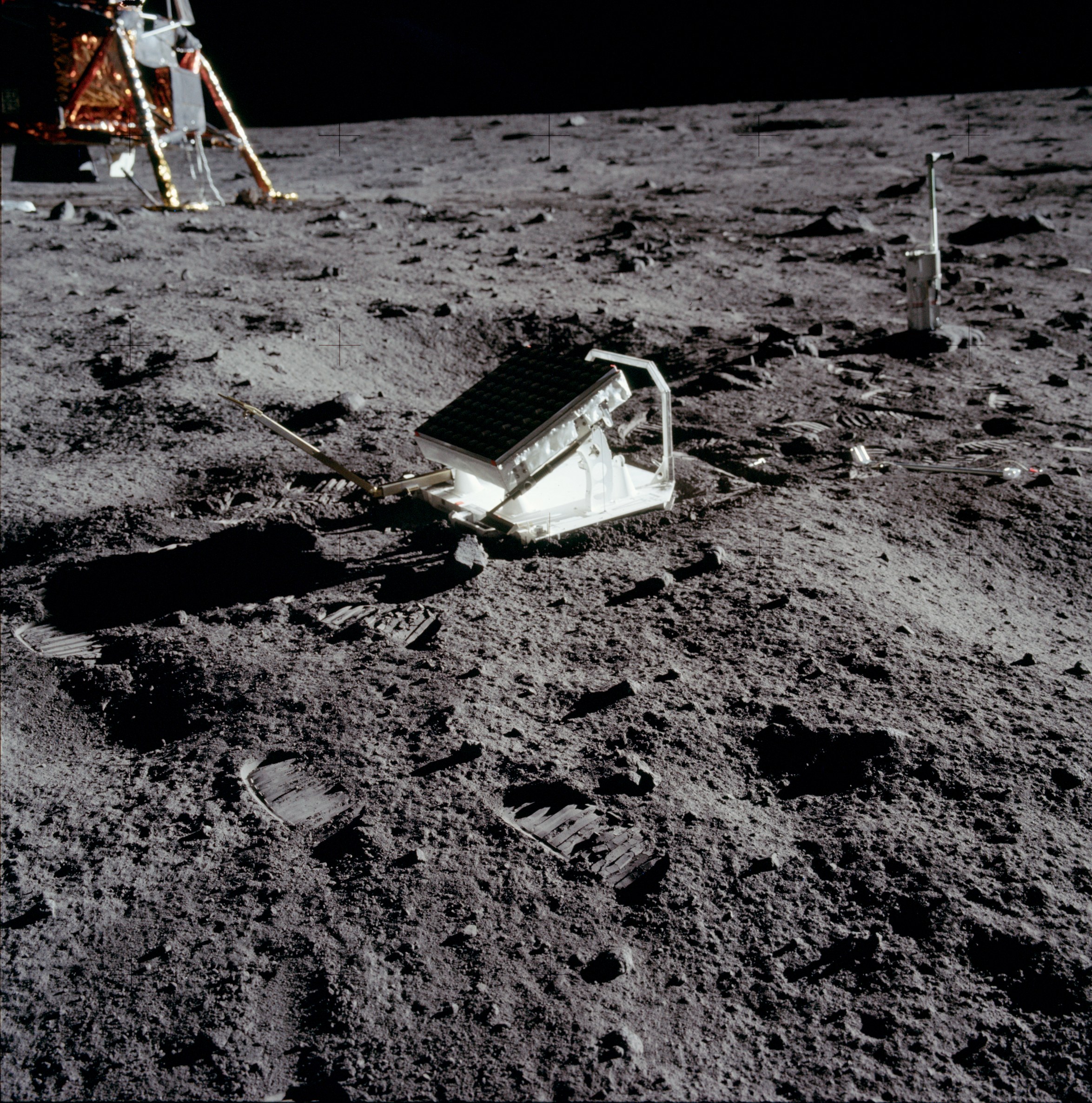
OBJECT ARCHIVE / PhotographThe deployed Apollo 11 Laser Ranging Retroreflector. AS11-40-5952.NASA Apollo Lunar Surface JournalArchive context, not necessarily photographed on this event's date.View image record (opens in a new tab) Moon Apollo 11 Eagle descent stageApollo 11 launchesLaunch
Eagle begins its journey inside the Saturn V-launched Apollo spacecraft.
Dates are UTC. The 21 July date marks the crewed ascent stage leaving the descent stage behind; it is not a later inspection of the remaining hardware.
Explore Eagle descent stage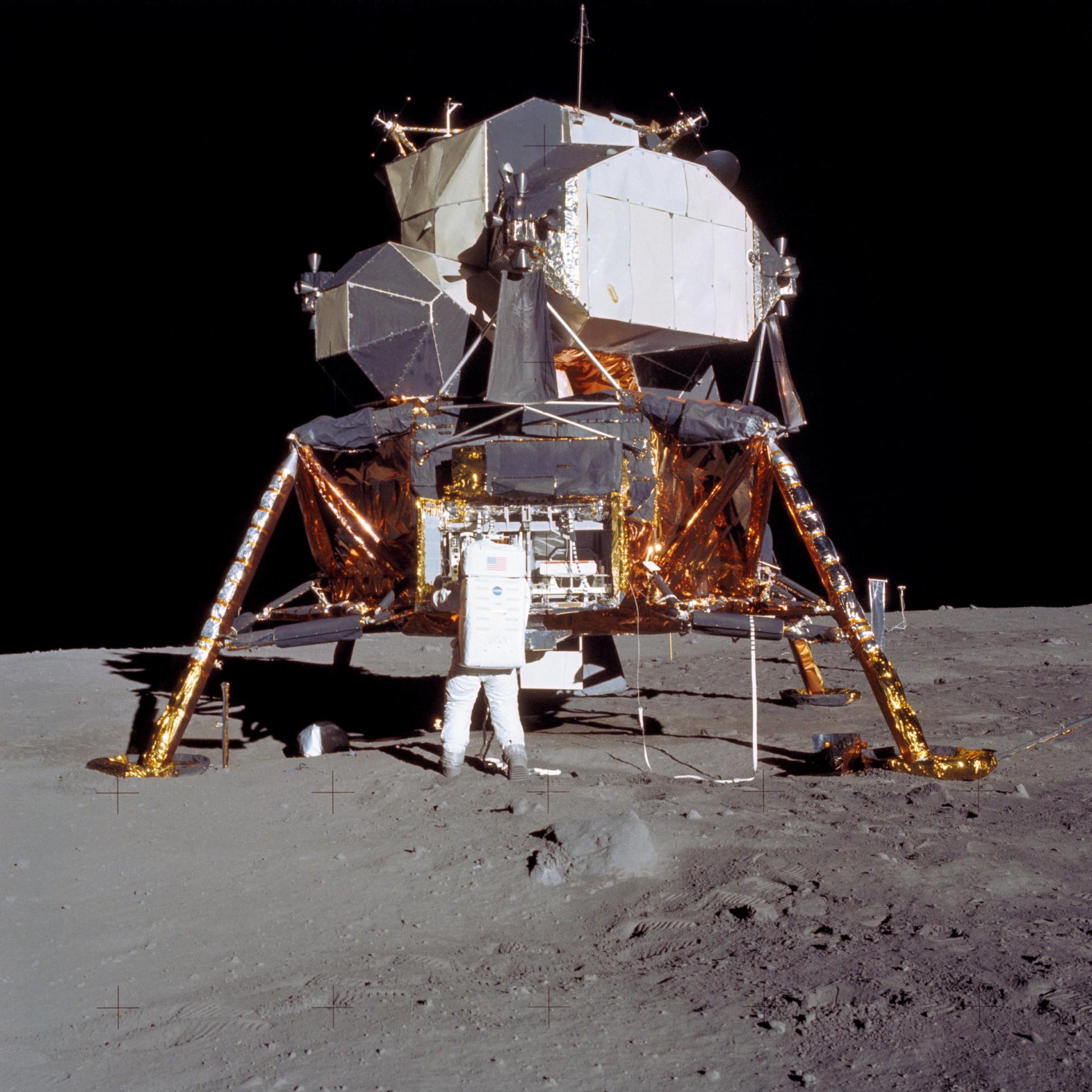
OBJECT ARCHIVE / PhotographBuzz Aldrin unloads Eagle on 20 July 1969. This photograph shows the complete Lunar Module before departure; only its four-legged lower descent stage remained after the ascent stage lifted off.NASA / Neil ArmstrongArchive context, not necessarily photographed on this event's date.View image record (opens in a new tab) Moon Apollo 11 Apollo 11 reflectorThe experiment reaches Tranquility BaseArrival
Eagle lands with the folded reflector among its surface equipment.
Dates are UTC. No operational end date is assigned: this passive reflector has no onboard power supply to exhaust and remains listed by the laser-ranging service.
Explore Apollo 11 reflector OBJECT ARCHIVE / PhotographThe deployed Apollo 11 Laser Ranging Retroreflector. AS11-40-5952.NASA Apollo Lunar Surface JournalArchive context, not necessarily photographed on this event's date.View image record (opens in a new tab) Moon Apollo 11 Eagle descent stageEagle landsDeployment
The Lunar Module touches down in Mare Tranquillitatis, establishing Tranquility Base.
Dates are UTC. The 21 July date marks the crewed ascent stage leaving the descent stage behind; it is not a later inspection of the remaining hardware.
Explore Eagle descent stage OBJECT ARCHIVE / PhotographBuzz Aldrin unloads Eagle on 20 July 1969. This photograph shows the complete Lunar Module before departure; only its four-legged lower descent stage remained after the ascent stage lifted off.NASA / Neil ArmstrongArchive context, not necessarily photographed on this event's date.View image record (opens in a new tab) Moon Apollo 11 Apollo 11 reflectorAstronauts deploy the reflectorDeployment
The array is placed and aimed so observatories on Earth can use it as a laser-ranging target.
Dates are UTC. No operational end date is assigned: this passive reflector has no onboard power supply to exhaust and remains listed by the laser-ranging service.
Explore Apollo 11 reflector OBJECT ARCHIVE / PhotographThe deployed Apollo 11 Laser Ranging Retroreflector. AS11-40-5952.NASA Apollo Lunar Surface JournalArchive context, not necessarily photographed on this event's date.View image record (opens in a new tab) Moon Apollo 11 Eagle descent stageSurface exploration concludesScience
After the Moon walk and experiment deployment, the crew prepares to leave the surface.
Dates are UTC. The 21 July date marks the crewed ascent stage leaving the descent stage behind; it is not a later inspection of the remaining hardware.
Explore Eagle descent stage OBJECT ARCHIVE / PhotographBuzz Aldrin unloads Eagle on 20 July 1969. This photograph shows the complete Lunar Module before departure; only its four-legged lower descent stage remained after the ascent stage lifted off.NASA / Neil ArmstrongArchive context, not necessarily photographed on this event's date.View image record (opens in a new tab) Moon Apollo 11 Eagle descent stageThe ascent stage departsConclusion
Eagle's upper stage lifts the crew to lunar orbit. The descent stage stays behind as the launch platform it was designed to be.
Dates are UTC. The 21 July date marks the crewed ascent stage leaving the descent stage behind; it is not a later inspection of the remaining hardware.
Explore Eagle descent stage OBJECT ARCHIVE / PhotographBuzz Aldrin unloads Eagle on 20 July 1969. This photograph shows the complete Lunar Module before departure; only its four-legged lower descent stage remained after the ascent stage lifted off.NASA / Neil ArmstrongArchive context, not necessarily photographed on this event's date.View image record (opens in a new tab) Moon Apollo 15 Apollo 15 roverApollo 15 launchesLaunch
The folded rover begins its trip to the Moon attached to the Lunar Module.
Dates are UTC calendar dates. The mission-end field records the rover’s last crewed traverse and parking, not a verified later electrical shutdown date.
Explore Apollo 15 rover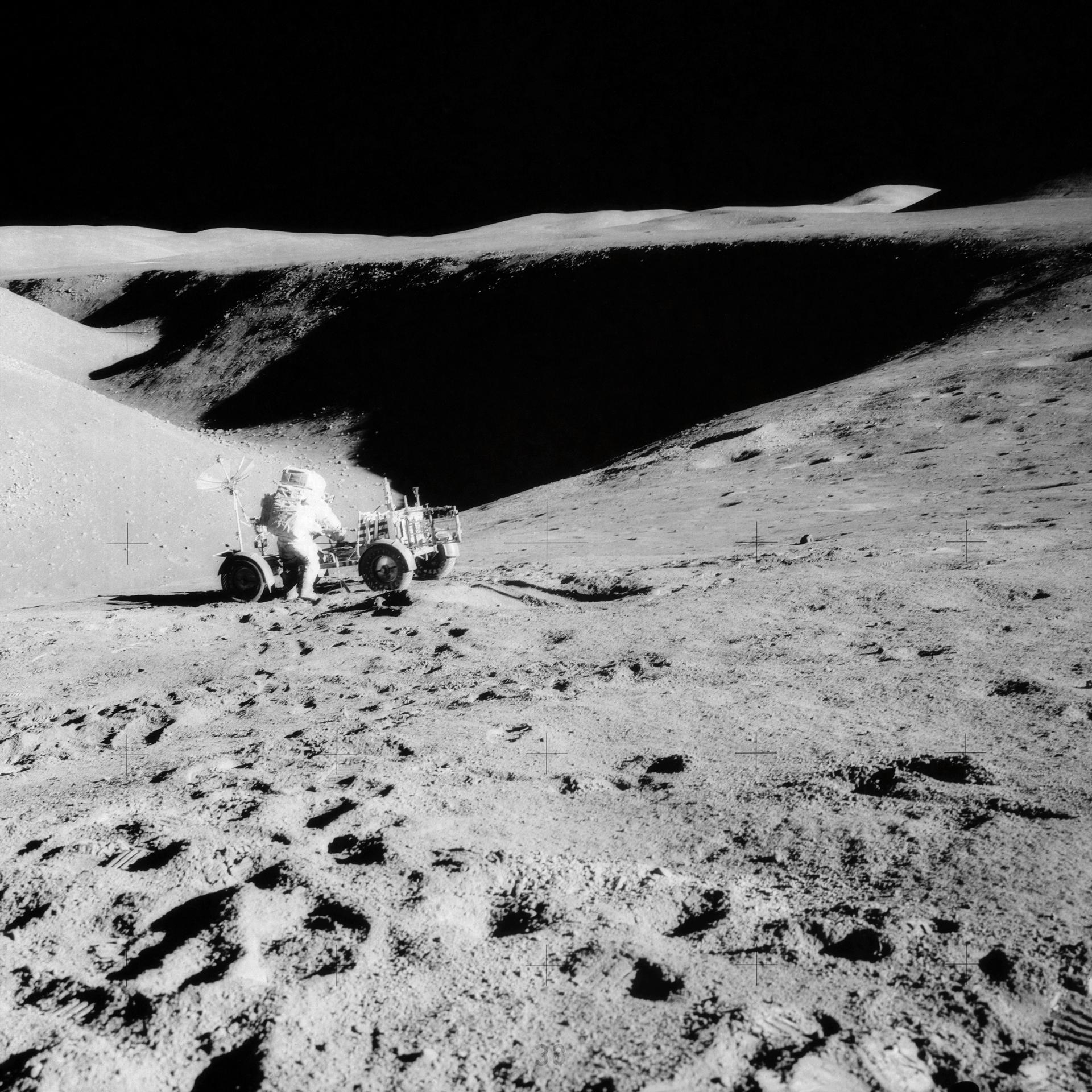
OBJECT ARCHIVE / PhotographDavid Scott and the Apollo 15 rover during lunar surface operations. AS15-85-11451.NASA / James IrwinArchive context, not necessarily photographed on this event's date.View image record (opens in a new tab) Moon Apollo 15 Apollo 15 roverFalcon reaches Hadley-ApennineArrival
Apollo 15’s Lunar Module lands in the region the rover will help explore.
Dates are UTC calendar dates. The mission-end field records the rover’s last crewed traverse and parking, not a verified later electrical shutdown date.
Explore Apollo 15 rover OBJECT ARCHIVE / PhotographDavid Scott and the Apollo 15 rover during lunar surface operations. AS15-85-11451.NASA / James IrwinArchive context, not necessarily photographed on this event's date.View image record (opens in a new tab) Moon Apollo 15 Apollo 15 roverThe rover unfoldsDeployment
The crew deploys the Lunar Roving Vehicle and begins the first crewed drive on another world.
Dates are UTC calendar dates. The mission-end field records the rover’s last crewed traverse and parking, not a verified later electrical shutdown date.
Explore Apollo 15 rover OBJECT ARCHIVE / PhotographDavid Scott and the Apollo 15 rover during lunar surface operations. AS15-85-11451.NASA / James IrwinArchive context, not necessarily photographed on this event's date.View image record (opens in a new tab) Moon Apollo 15 Apollo 15 roverThird traverse concludesConclusion
After the final field excursion, the astronauts park the rover near the landing area.
Dates are UTC calendar dates. The mission-end field records the rover’s last crewed traverse and parking, not a verified later electrical shutdown date.
Explore Apollo 15 rover OBJECT ARCHIVE / PhotographDavid Scott and the Apollo 15 rover during lunar surface operations. AS15-85-11451.NASA / James IrwinArchive context, not necessarily photographed on this event's date.View image record (opens in a new tab) Deep Space Pioneer 10 Pioneer 10Pioneer 10 launchesLaunch
The probe leaves Florida late on 2 March local time, which is 3 March UTC.
Launch was 3 March 1972 UTC but 2 March local time in Florida. Routine mission operations ended 31 March 1997; last usable telemetry arrived 27 April 2002, and a final weak carrier without telemetry was detected 23 January 2003.
Explore Pioneer 10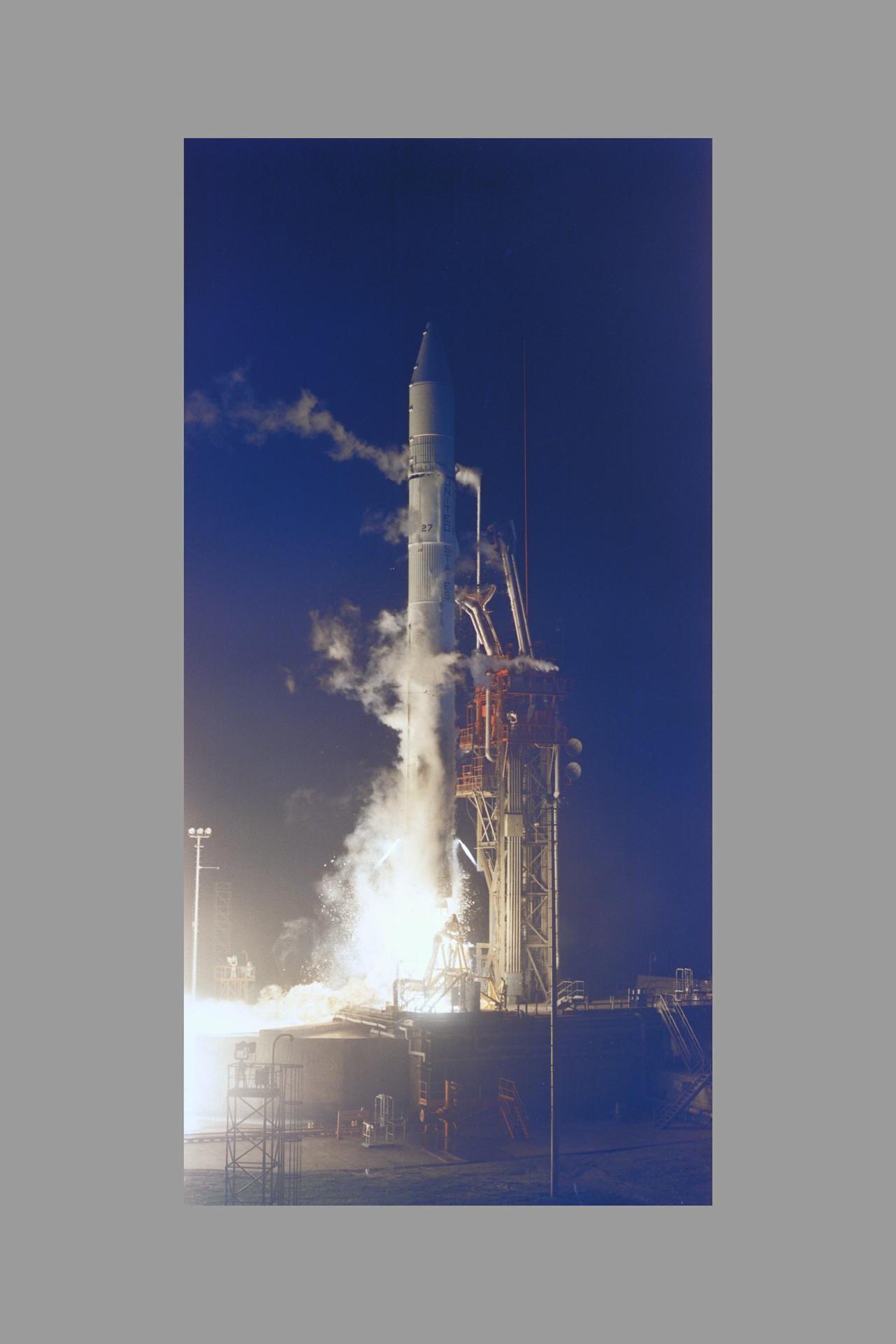
OBJECT ARCHIVE / PhotographPioneer 10 launches at 8:49 p.m. EST on 2 March 1972—3 March in UTC. ARC-1972-AC72-2142.NASA / Kennedy Space CenterArchive context, not necessarily photographed on this event's date.View image record (opens in a new tab) Deep Space Pioneer 10 Pioneer 10First close Jupiter flybyScience
Pioneer 10 makes humanity’s first spacecraft encounter with Jupiter.
Launch was 3 March 1972 UTC but 2 March local time in Florida. Routine mission operations ended 31 March 1997; last usable telemetry arrived 27 April 2002, and a final weak carrier without telemetry was detected 23 January 2003.
Explore Pioneer 10 OBJECT ARCHIVE / PhotographPioneer 10 launches at 8:49 p.m. EST on 2 March 1972—3 March in UTC. ARC-1972-AC72-2142.NASA / Kennedy Space CenterArchive context, not necessarily photographed on this event's date.View image record (opens in a new tab) Mars Viking 1 Viking 1Viking 1 launchesLaunch
The orbiter-lander spacecraft begins its journey to Mars.
NASA sources disagree on the final-contact day: NASA Science gives 11 November 1982 while NSSDCA gives 13 November. The collection preserves only the verified month.
Explore Viking 1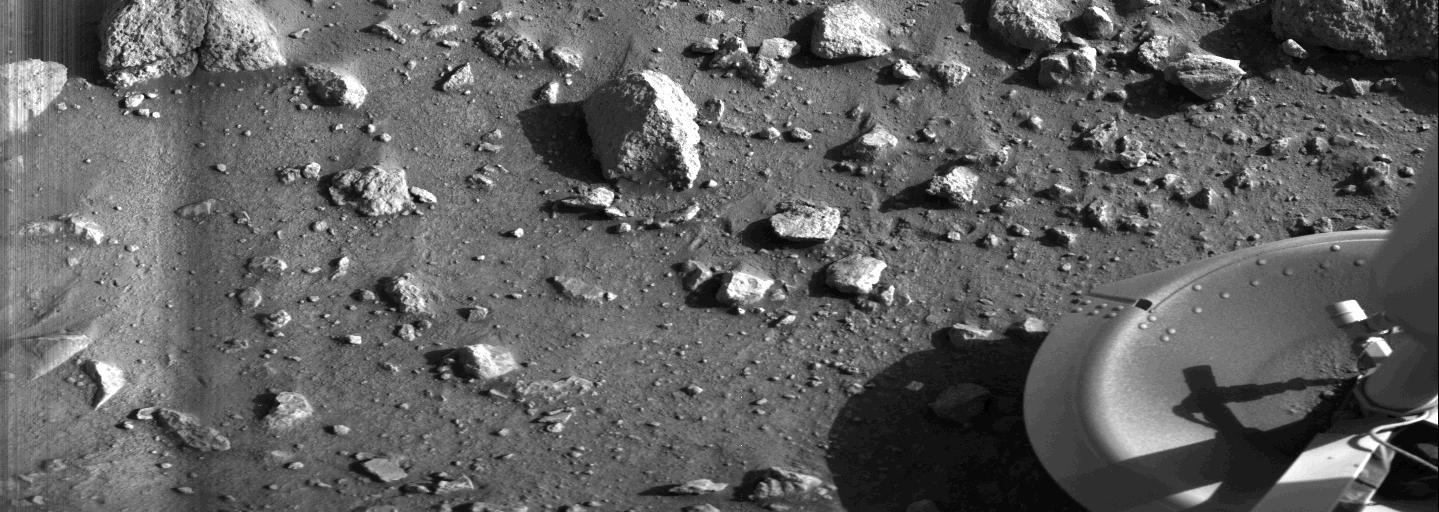
OBJECT ARCHIVE / PhotographThe first image from Viking 1 on 20 July 1976. It shows the nearby surface and a footpad, not the entire lander. PIA00381.NASA / JPLArchive context, not necessarily photographed on this event's date.View image record (opens in a new tab) Mars Viking 1 Viking 1The carrier enters Mars orbitArrival
Orbital images help certify the landing site before separation.
NASA sources disagree on the final-contact day: NASA Science gives 11 November 1982 while NSSDCA gives 13 November. The collection preserves only the verified month.
Explore Viking 1 OBJECT ARCHIVE / PhotographThe first image from Viking 1 on 20 July 1976. It shows the nearby surface and a footpad, not the entire lander. PIA00381.NASA / JPLArchive context, not necessarily photographed on this event's date.View image record (opens in a new tab) Mars Viking 1 Viking 1The lander touches downDeployment
Viking 1 lands in western Chryse Planitia and starts transmitting its first surface view about 25 seconds later.
NASA sources disagree on the final-contact day: NASA Science gives 11 November 1982 while NSSDCA gives 13 November. The collection preserves only the verified month.
Explore Viking 1 OBJECT ARCHIVE / PhotographThe first image from Viking 1 on 20 July 1976. It shows the nearby surface and a footpad, not the entire lander. PIA00381.NASA / JPLArchive context, not necessarily photographed on this event's date.View image record (opens in a new tab) Mars Viking 1 Viking 1The first soil sample is collectedScience
After freeing a sampler-arm locking pin, the lander begins delivering Martian material to onboard experiments.
NASA sources disagree on the final-contact day: NASA Science gives 11 November 1982 while NSSDCA gives 13 November. The collection preserves only the verified month.
Explore Viking 1 OBJECT ARCHIVE / PhotographThe first image from Viking 1 on 20 July 1976. It shows the nearby surface and a footpad, not the entire lander. PIA00381.NASA / JPLArchive context, not necessarily photographed on this event's date.View image record (opens in a new tab) Mars Viking 1 Viking 1Communications endConclusion
Contact is lost in November. NASA records disagree on the exact day, so this timeline does not invent one.
NASA sources disagree on the final-contact day: NASA Science gives 11 November 1982 while NSSDCA gives 13 November. The collection preserves only the verified month.
Explore Viking 1 OBJECT ARCHIVE / PhotographThe first image from Viking 1 on 20 July 1976. It shows the nearby surface and a footpad, not the entire lander. PIA00381.NASA / JPLArchive context, not necessarily photographed on this event's date.View image record (opens in a new tab) Deep Space Pioneer 10 Pioneer 10Routine mission endsConclusion
NASA concludes routine operations, although occasional contact attempts continue.
Launch was 3 March 1972 UTC but 2 March local time in Florida. Routine mission operations ended 31 March 1997; last usable telemetry arrived 27 April 2002, and a final weak carrier without telemetry was detected 23 January 2003.
Explore Pioneer 10Source records OBJECT ARCHIVE / PhotographPioneer 10 launches at 8:49 p.m. EST on 2 March 1972—3 March in UTC. ARC-1972-AC72-2142.NASA / Kennedy Space CenterArchive context, not necessarily photographed on this event's date.View image record (opens in a new tab) Deep Space Pioneer 10 Pioneer 10Last usable telemetryLegacy
Earth receives the last signal strong enough to carry spacecraft engineering data.
Launch was 3 March 1972 UTC but 2 March local time in Florida. Routine mission operations ended 31 March 1997; last usable telemetry arrived 27 April 2002, and a final weak carrier without telemetry was detected 23 January 2003.
Explore Pioneer 10Source records OBJECT ARCHIVE / PhotographPioneer 10 launches at 8:49 p.m. EST on 2 March 1972—3 March in UTC. ARC-1972-AC72-2142.NASA / Kennedy Space CenterArchive context, not necessarily photographed on this event's date.View image record (opens in a new tab) Deep Space Pioneer 10 Pioneer 10Final weak carrier detectedLegacy
A final extremely weak signal is detected without usable telemetry.
Launch was 3 March 1972 UTC but 2 March local time in Florida. Routine mission operations ended 31 March 1997; last usable telemetry arrived 27 April 2002, and a final weak carrier without telemetry was detected 23 January 2003.
Explore Pioneer 10Source records OBJECT ARCHIVE / PhotographPioneer 10 launches at 8:49 p.m. EST on 2 March 1972—3 March in UTC. ARC-1972-AC72-2142.NASA / Kennedy Space CenterArchive context, not necessarily photographed on this event's date.View image record (opens in a new tab) Mars Mars Exploration Rover OpportunityOpportunity launchesLaunch
The second Mars Exploration Rover begins its interplanetary journey.
Dates use UTC: launch was 8 July UTC but 7 July in Florida; landing was 25 January UTC but 24 January Pacific time. Last contact was 10 June 2018; NASA declared the mission complete on 13 February 2019.
Explore OpportunitySource records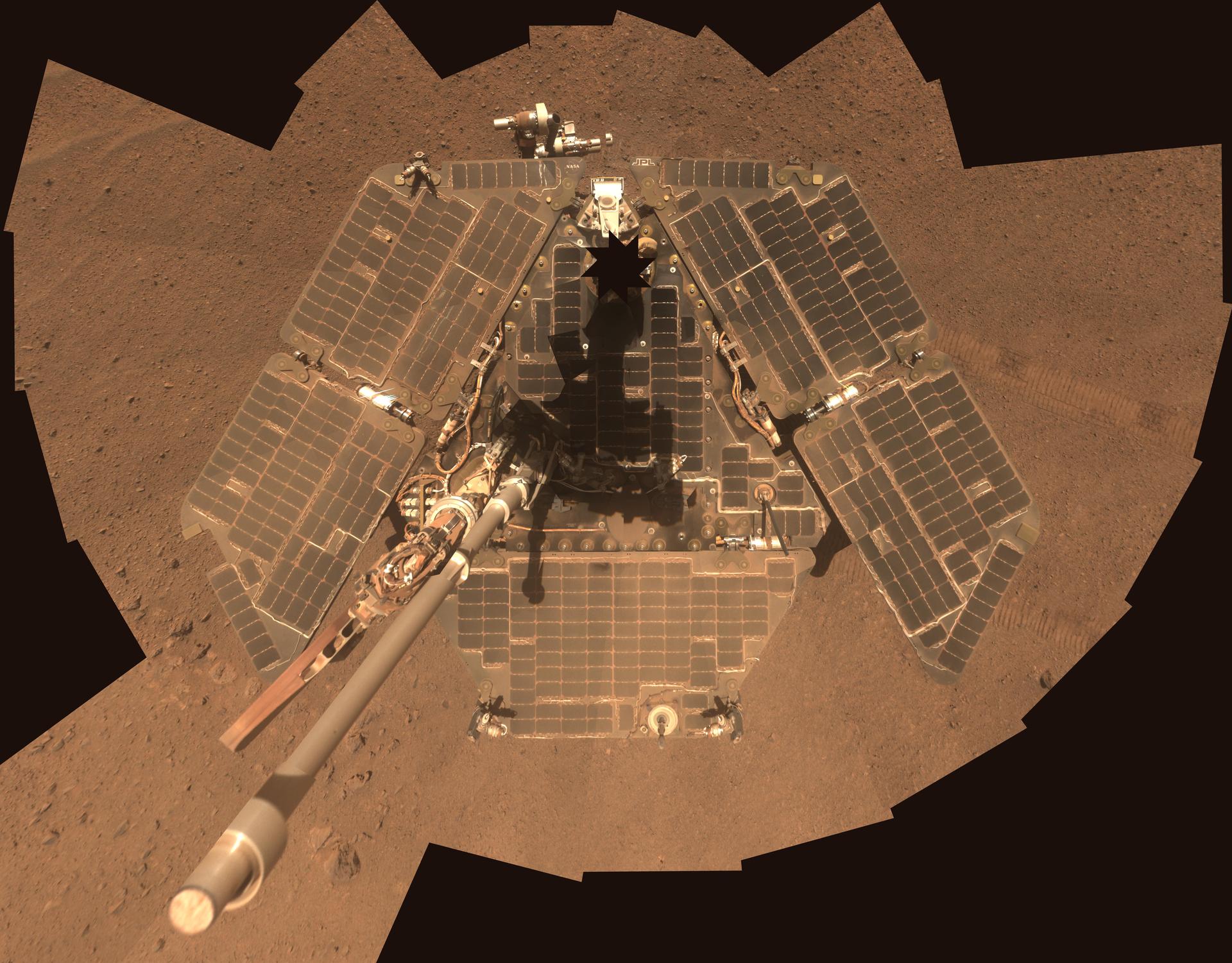
OBJECT ARCHIVE / Photo mosaicOpportunity self-portrait assembled from Pancam images taken 22–24 March 2014 in approximately true color. The camera mast is absent because of the projection. PIA18079.NASA / JPL-Caltech / Cornell University / Arizona State UniversityArchive context, not necessarily photographed on this event's date.View image record (opens in a new tab) Mars Mars Exploration Rover OpportunityA hole in one on MarsDeployment
Airbags carry Opportunity into Eagle crater at Meridiani Planum.
Dates use UTC: launch was 8 July UTC but 7 July in Florida; landing was 25 January UTC but 24 January Pacific time. Last contact was 10 June 2018; NASA declared the mission complete on 13 February 2019.
Explore OpportunitySource records OBJECT ARCHIVE / Photo mosaicOpportunity self-portrait assembled from Pancam images taken 22–24 March 2014 in approximately true color. The camera mast is absent because of the projection. PIA18079.NASA / JPL-Caltech / Cornell University / Arizona State UniversityArchive context, not necessarily photographed on this event's date.View image record (opens in a new tab) Deep Space Kepler / K2 KeplerKepler launchesLaunch
A Delta II sends the observatory toward an Earth-trailing orbit around the Sun.
Launch was 7 March 2009 UTC but 6 March local time in Florida. Retirement was announced 30 October 2018; final shutdown commands were received on 15 November. That command date is not relabeled as a verified final-telemetry timestamp.
Explore KeplerSource records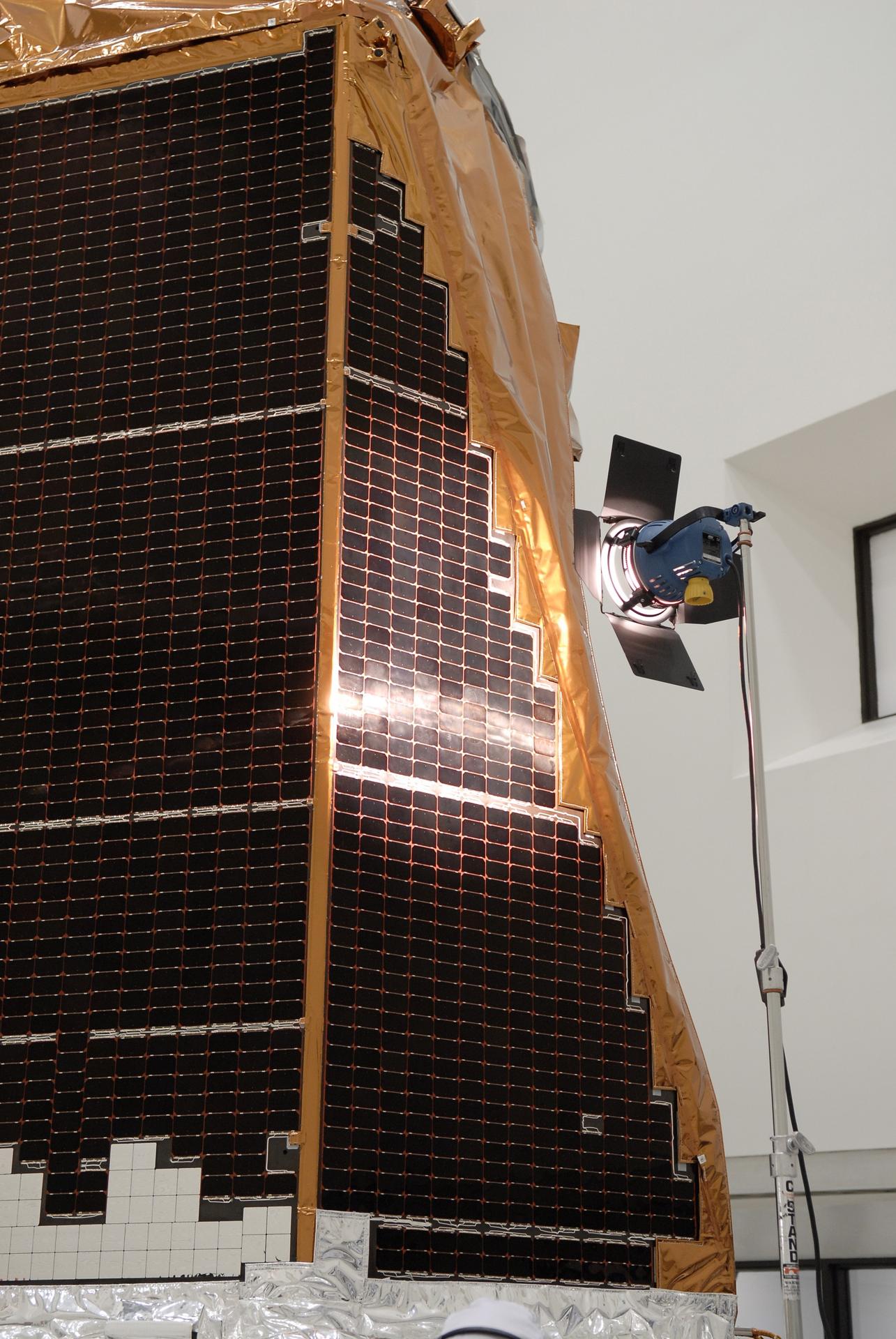
OBJECT ARCHIVE / PhotographKepler during solar-array illumination testing at Cape Canaveral on 13 January 2009. KSC-2009-1124.NASA / Kim ShiflettArchive context, not necessarily photographed on this event's date.View image record (opens in a new tab) Deep Space Kepler / K2 KeplerScience operations beginScience
The telescope starts its sustained survey of stellar brightness.
Launch was 7 March 2009 UTC but 6 March local time in Florida. Retirement was announced 30 October 2018; final shutdown commands were received on 15 November. That command date is not relabeled as a verified final-telemetry timestamp.
Explore Kepler OBJECT ARCHIVE / PhotographKepler during solar-array illumination testing at Cape Canaveral on 13 January 2009. KSC-2009-1124.NASA / Kim ShiflettArchive context, not necessarily photographed on this event's date.View image record (opens in a new tab) Mars Mars Exploration Rover OpportunityEndeavour crater reachedScience
After years of driving, the rover reaches the rim of a much larger and older crater.
Dates use UTC: launch was 8 July UTC but 7 July in Florida; landing was 25 January UTC but 24 January Pacific time. Last contact was 10 June 2018; NASA declared the mission complete on 13 February 2019.
Explore Opportunity OBJECT ARCHIVE / Photo mosaicOpportunity self-portrait assembled from Pancam images taken 22–24 March 2014 in approximately true color. The camera mast is absent because of the projection. PIA18079.NASA / JPL-Caltech / Cornell University / Arizona State UniversityArchive context, not necessarily photographed on this event's date.View image record (opens in a new tab) Deep Space Kepler / K2 KeplerK2 begins a second missionLegacy
A new pointing strategy lets Kepler continue observing after two reaction wheels fail.
Launch was 7 March 2009 UTC but 6 March local time in Florida. Retirement was announced 30 October 2018; final shutdown commands were received on 15 November. That command date is not relabeled as a verified final-telemetry timestamp.
Explore KeplerSource records OBJECT ARCHIVE / PhotographKepler during solar-array illumination testing at Cape Canaveral on 13 January 2009. KSC-2009-1124.NASA / Kim ShiflettArchive context, not necessarily photographed on this event's date.View image record (opens in a new tab) Mars InSight InSightInSight launchesLaunch
The geophysics mission begins its journey from Vandenberg Air Force Base.
Last communication was received on 15 December 2022. NASA declared the mission over on 21 December after two further attempts failed.
Explore InSightSource records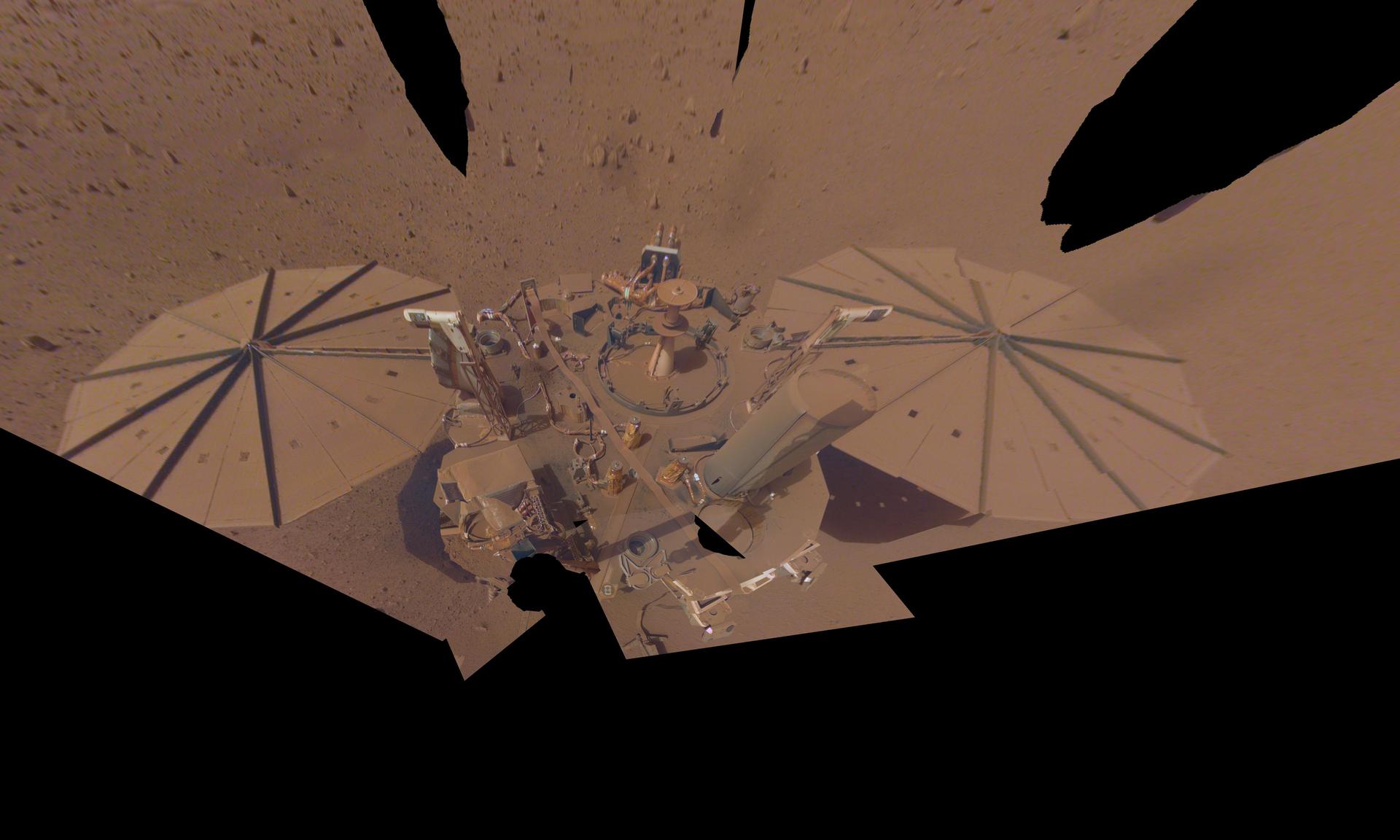
OBJECT ARCHIVE / Photo mosaicInSight’s final selfie, assembled from robotic-arm camera views taken 24 April 2022. Dust covers the solar panels. PIA25287.NASA / JPL-CaltechArchive context, not necessarily photographed on this event's date.View image record (opens in a new tab) Mars Mars Exploration Rover OpportunityLast communicationConclusion
A major dust storm blocks sunlight and the solar-powered rover falls silent.
Dates use UTC: launch was 8 July UTC but 7 July in Florida; landing was 25 January UTC but 24 January Pacific time. Last contact was 10 June 2018; NASA declared the mission complete on 13 February 2019.
Explore Opportunity OBJECT ARCHIVE / Photo mosaicOpportunity self-portrait assembled from Pancam images taken 22–24 March 2014 in approximately true color. The camera mast is absent because of the projection. PIA18079.NASA / JPL-Caltech / Cornell University / Arizona State UniversityArchive context, not necessarily photographed on this event's date.View image record (opens in a new tab) Deep Space Kepler / K2 KeplerRetirement announcedConclusion
NASA retires Kepler after it exhausts the fuel needed for further science pointing.
Launch was 7 March 2009 UTC but 6 March local time in Florida. Retirement was announced 30 October 2018; final shutdown commands were received on 15 November. That command date is not relabeled as a verified final-telemetry timestamp.
Explore Kepler OBJECT ARCHIVE / PhotographKepler during solar-array illumination testing at Cape Canaveral on 13 January 2009. KSC-2009-1124.NASA / Kim ShiflettArchive context, not necessarily photographed on this event's date.View image record (opens in a new tab) Deep Space Kepler / K2 KeplerFinal commands receivedLegacy
The telescope receives commands that disable its transmitters and protective fault modes.
Launch was 7 March 2009 UTC but 6 March local time in Florida. Retirement was announced 30 October 2018; final shutdown commands were received on 15 November. That command date is not relabeled as a verified final-telemetry timestamp.
Explore Kepler OBJECT ARCHIVE / PhotographKepler during solar-array illumination testing at Cape Canaveral on 13 January 2009. KSC-2009-1124.NASA / Kim ShiflettArchive context, not necessarily photographed on this event's date.View image record (opens in a new tab) Mars InSight InSightLanding in Elysium PlanitiaDeployment
The stationary lander reaches a broad plain chosen for safe operations and instrument placement.
Last communication was received on 15 December 2022. NASA declared the mission over on 21 December after two further attempts failed.
Explore InSightSource records OBJECT ARCHIVE / Photo mosaicInSight’s final selfie, assembled from robotic-arm camera views taken 24 April 2022. Dust covers the solar panels. PIA25287.NASA / JPL-CaltechArchive context, not necessarily photographed on this event's date.View image record (opens in a new tab) Mars InSight InSightA seismometer touches MarsScience
The robotic arm places SEIS directly on the surface.
Last communication was received on 15 December 2022. NASA declared the mission over on 21 December after two further attempts failed.
Explore InSight OBJECT ARCHIVE / Photo mosaicInSight’s final selfie, assembled from robotic-arm camera views taken 24 April 2022. Dust covers the solar panels. PIA25287.NASA / JPL-CaltechArchive context, not necessarily photographed on this event's date.View image record (opens in a new tab) Mars Mars Exploration Rover OpportunityMission declared completeLegacy
NASA ends the recovery campaign after more than fourteen years of surface exploration.
Dates use UTC: launch was 8 July UTC but 7 July in Florida; landing was 25 January UTC but 24 January Pacific time. Last contact was 10 June 2018; NASA declared the mission complete on 13 February 2019.
Explore Opportunity OBJECT ARCHIVE / Photo mosaicOpportunity self-portrait assembled from Pancam images taken 22–24 March 2014 in approximately true color. The camera mast is absent because of the projection. PIA18079.NASA / JPL-Caltech / Cornell University / Arizona State UniversityArchive context, not necessarily photographed on this event's date.View image record (opens in a new tab) Mars InSight InSightLast communicationConclusion
The final received signal arrives as accumulated dust leaves too little solar power.
Last communication was received on 15 December 2022. NASA declared the mission over on 21 December after two further attempts failed.
Explore InSightSource records OBJECT ARCHIVE / Photo mosaicInSight’s final selfie, assembled from robotic-arm camera views taken 24 April 2022. Dust covers the solar panels. PIA25287.NASA / JPL-CaltechArchive context, not necessarily photographed on this event's date.View image record (opens in a new tab) Mars InSight InSightMission retiredLegacy
NASA declares the mission complete after two additional communication attempts fail.
Last communication was received on 15 December 2022. NASA declared the mission over on 21 December after two further attempts failed.
Explore InSight OBJECT ARCHIVE / Photo mosaicInSight’s final selfie, assembled from robotic-arm camera views taken 24 April 2022. Dust covers the solar panels. PIA25287.NASA / JPL-CaltechArchive context, not necessarily photographed on this event's date.View image record (opens in a new tab) Moon Apollo 11 Apollo 11 reflectorStill a laser-ranging targetLegacy
The International Laser Ranging Service continues to list Apollo 11’s reflector as a current lunar ranging target.
Dates are UTC. No operational end date is assigned: this passive reflector has no onboard power supply to exhaust and remains listed by the laser-ranging service.
Explore Apollo 11 reflector OBJECT ARCHIVE / PhotographThe deployed Apollo 11 Laser Ranging Retroreflector. AS11-40-5952.NASA Apollo Lunar Surface JournalArchive context, not necessarily photographed on this event's date.View image record (opens in a new tab)