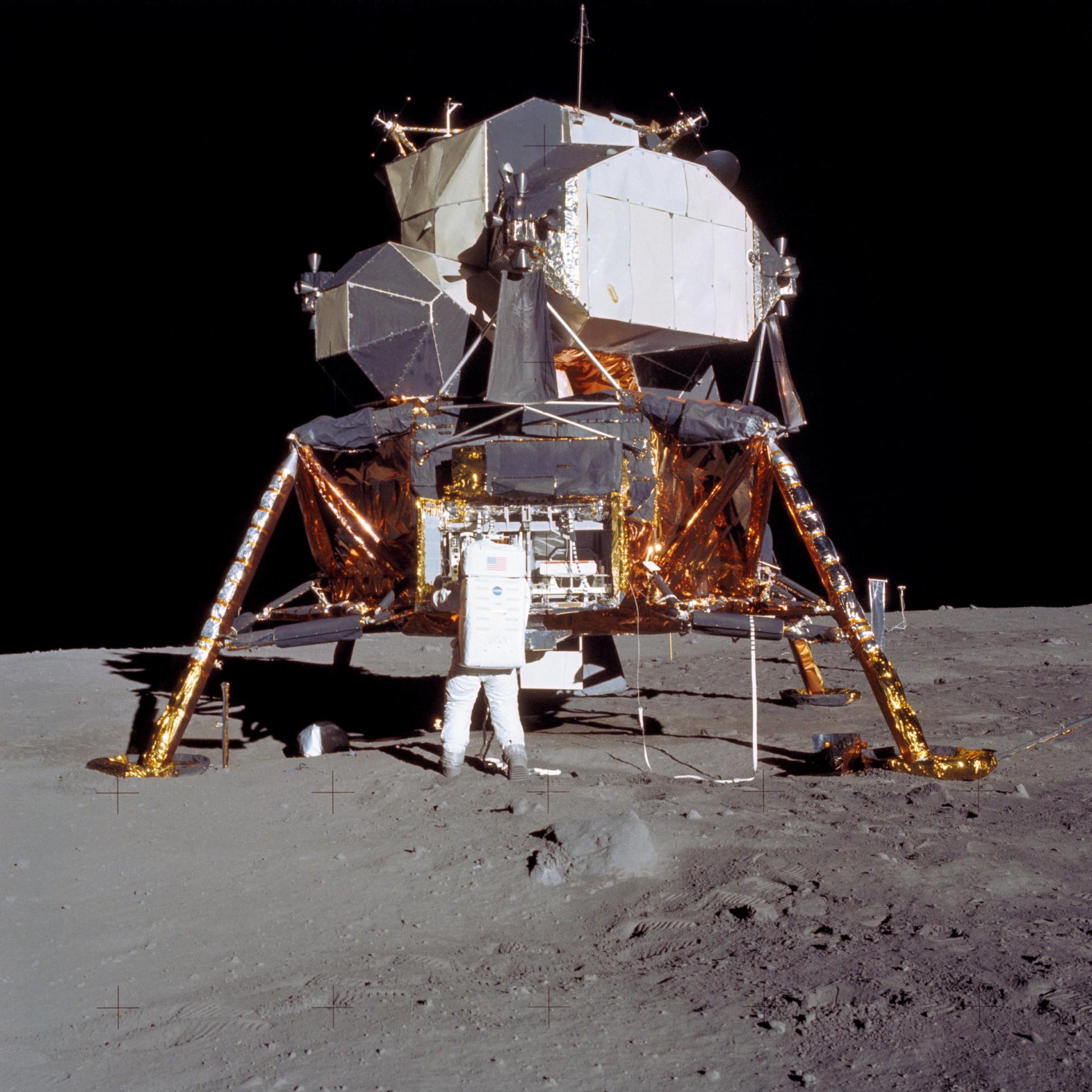
Eagle descent stage
The lower half of Eagle stayed at Tranquility Base after carrying two astronauts safely to the lunar surface.
LandersPhotograph
Four wheels that transformed how far astronauts could explore.
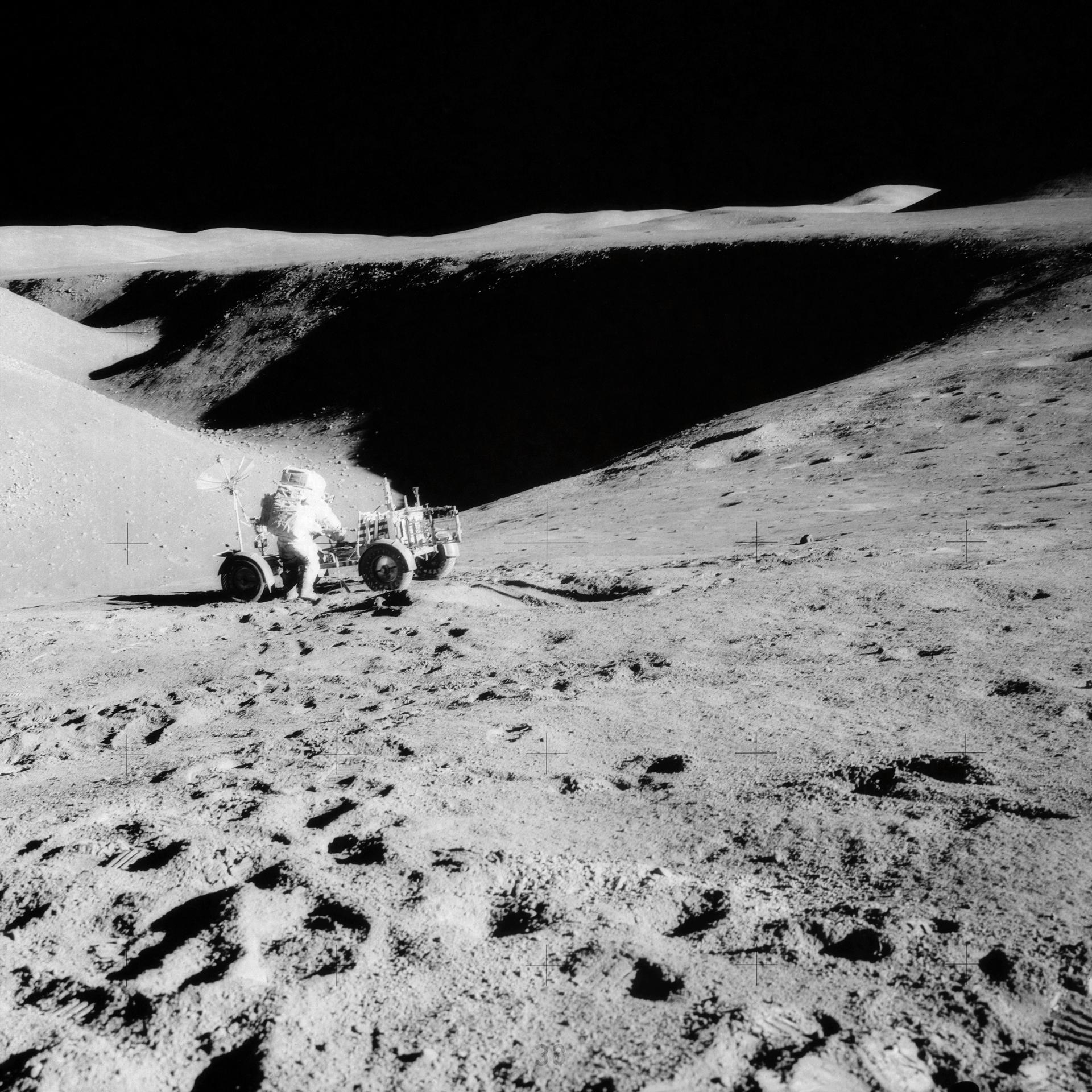
Folded against the Lunar Module for flight, the first operational Lunar Roving Vehicle opened into a two-seat electric field vehicle. David Scott and James Irwin used it during three excursions, extending their reach beyond what a walking-only expedition could safely cover. They parked it when their fieldwork ended, leaving a machine whose value was measured in the geology it helped them reach.
Carry two astronauts, geology tools, cameras, and lunar samples farther from the Lunar Module while preserving time and life-support capacity for scientific fieldwork.
Four battery-powered wheel motors drove a lightweight open vehicle. Independent steering, wire-mesh wheels, navigation instruments, and astronaut controls helped it cross uneven terrain; it folded for transport on the Lunar Module.
Expanded Apollo 15’s field range so the crew could investigate a wider variety of terrain near Hadley Rille and the Apennine mountains.
Carried astronauts, instruments, and collected samples across three traverses, making the rover part of the mission’s geological field system rather than simply transportation.
The folded rover begins its trip to the Moon attached to the Lunar Module.
Apollo 15’s Lunar Module lands in the region the rover will help explore.
The crew deploys the Lunar Roving Vehicle and begins the first crewed drive on another world.
After the final field excursion, the astronauts park the rover near the landing area.
Historical imagery, with its original context and credits. Select a photograph to look closer.
David Scott and the Apollo 15 rover during lunar surface operations. AS15-85-11451.
NASA / James IrwinOriginal archive entryEducational wording and data structuring are AI-assisted. The historical and scientific claims above are linked to the records below. No AI-generated media is used.
Supports the Apollo 15 rover engineering story, operational dates, exploration role, and findings.
Positions Eagle and the Apollo 11 reflector at documented coordinates and uses the Apollo 15 LM coordinate only as an approximate mission-site marker for the rover.
Primary profile photograph for the Apollo 15 rover.
The lower half of Eagle stayed at Tranquility Base after carrying two astronauts safely to the lunar surface.
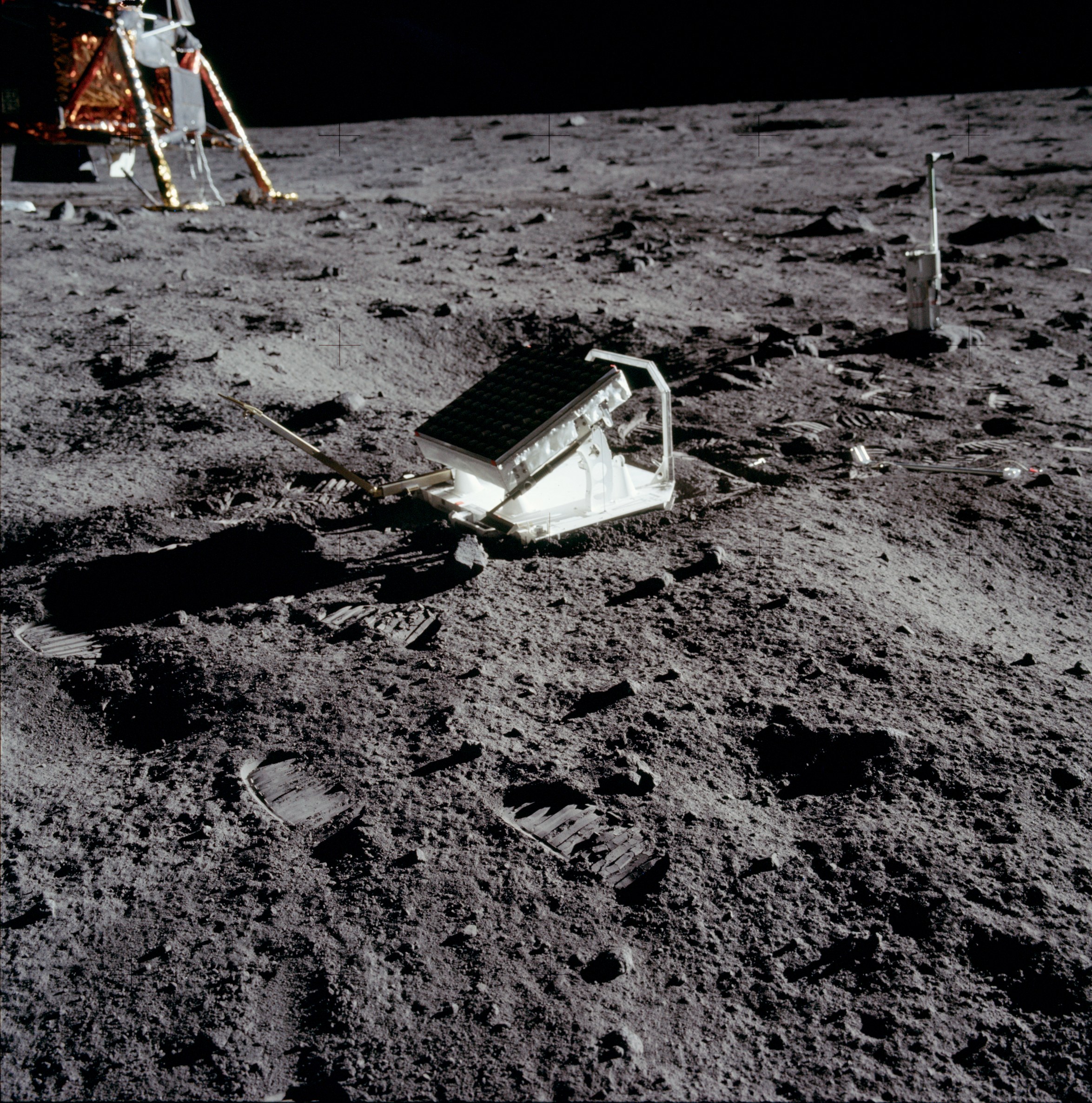
A power-free array of corner-cube mirrors still returns laser light sent from observatories on Earth.
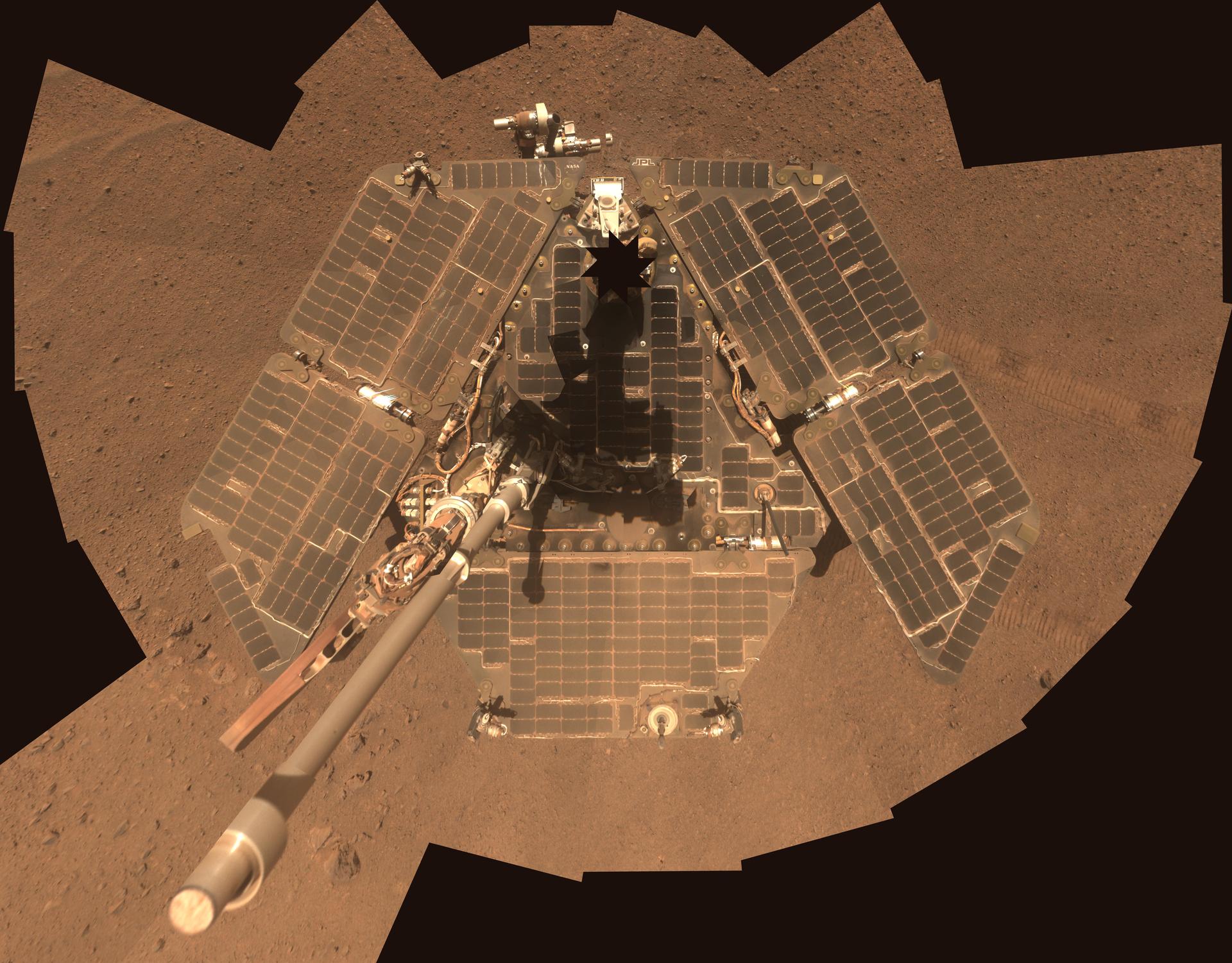
A solar-powered robotic geologist that followed the mineral and rock record of ancient water across Meridiani Planum.