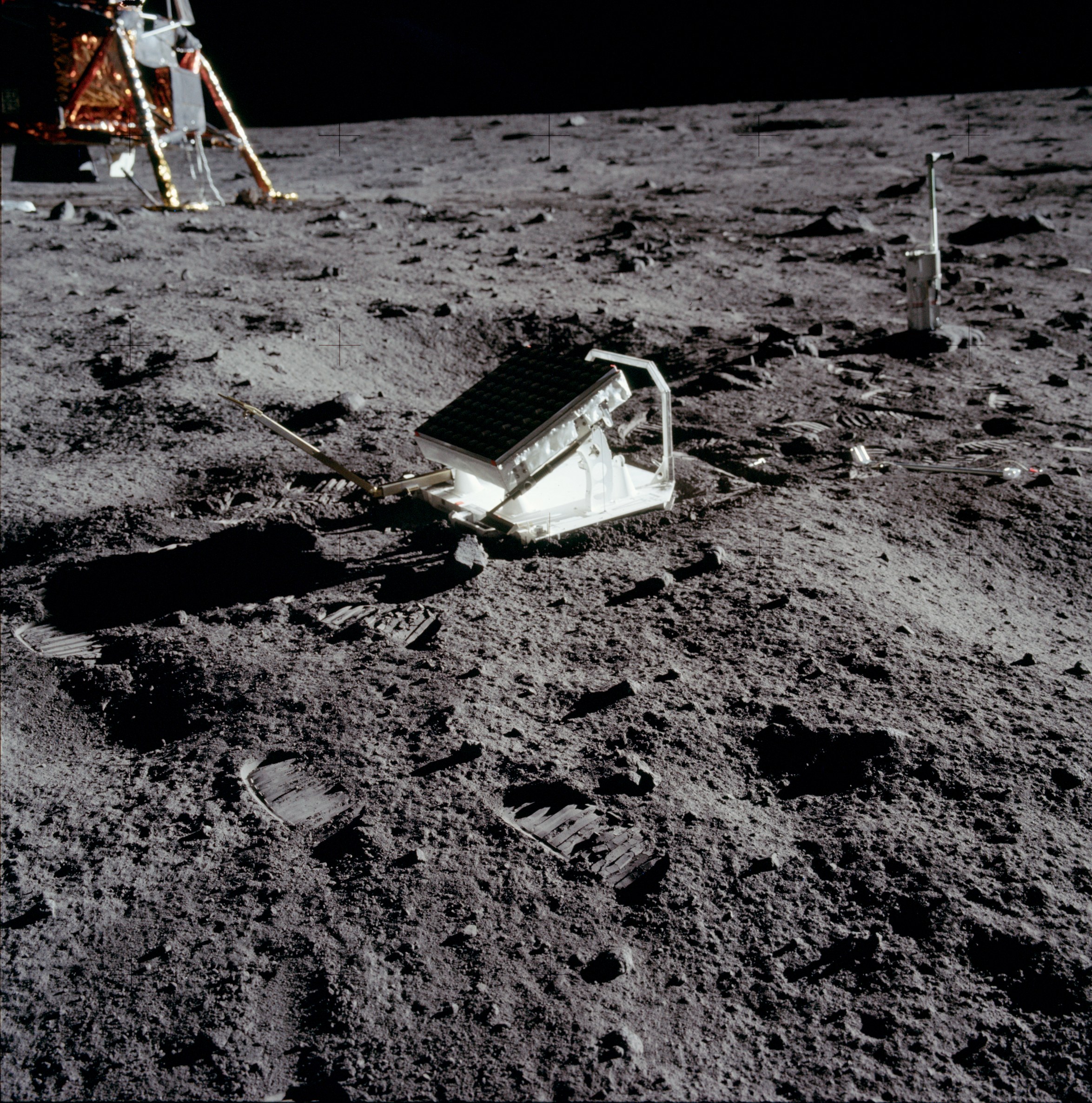
Apollo 11 reflector
A power-free array of corner-cube mirrors still returns laser light sent from observatories on Earth.
Scientific instrumentsPhotograph
The landing platform that made the first Moon walk possible.
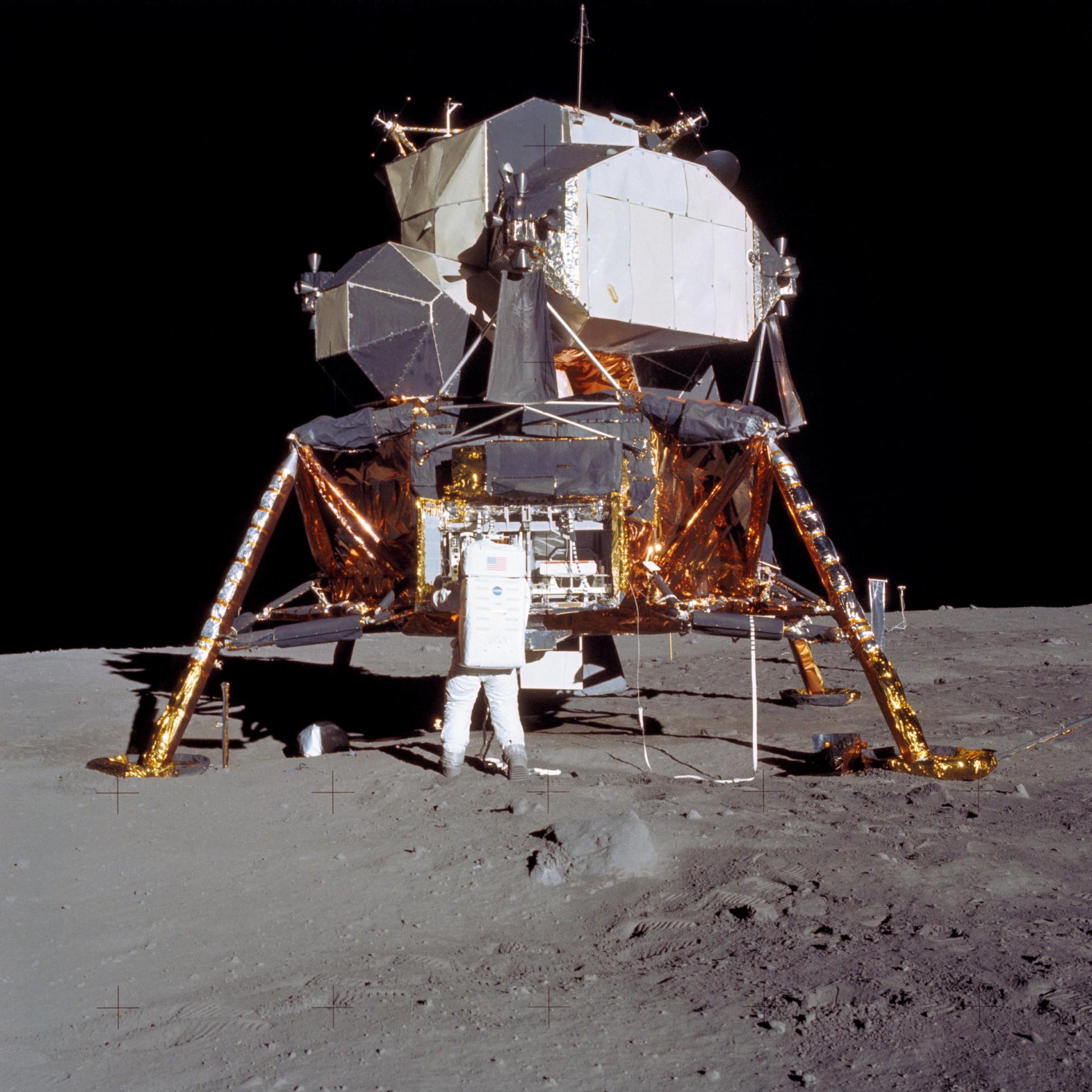
Eagle was built in two halves. The descent stage absorbed the final landing, held supplies, and became the launch platform for the upper ascent stage. When Neil Armstrong and Buzz Aldrin left the Moon, only that upper half departed. The machine pictured before liftoff is the complete Lunar Module; the four-legged lower stage is the part that remains.
Land two astronauts and their equipment safely on the Moon, support their surface stay, and provide the platform from which the ascent stage could return them to lunar orbit.
A throttleable descent engine slowed the Lunar Module while landing radar, guidance computers, and the crew steered toward a safe site. Four legs absorbed touchdown. The descent stage then supplied power, water, oxygen, storage, and a stable base until the ascent stage departed.
Enabled the first crewed exploration of the lunar surface, where the astronauts documented the site, collected samples, and deployed scientific instruments.
Established Tranquility Base as a documented reference site that can be compared with later surface and orbital observations.
Eagle begins its journey inside the Saturn V-launched Apollo spacecraft.
The Lunar Module touches down in Mare Tranquillitatis, establishing Tranquility Base.
After the Moon walk and experiment deployment, the crew prepares to leave the surface.
Eagle's upper stage lifts the crew to lunar orbit. The descent stage stays behind as the launch platform it was designed to be.
Historical imagery, with its original context and credits. Select a photograph to look closer.
Buzz Aldrin unloads Eagle on 20 July 1969. This photograph shows the complete Lunar Module before departure; only its four-legged lower descent stage remained after the ascent stage lifted off.
NASA / Neil ArmstrongOriginal archive entryEducational wording and data structuring are AI-assisted. The historical and scientific claims above are linked to the records below. No AI-generated media is used.
Supports Eagle descent-stage dates, purpose, operation, status, and mission timeline.
Positions Eagle and the Apollo 11 reflector at documented coordinates and uses the Apollo 15 LM coordinate only as an approximate mission-site marker for the rover.
Profile image with a caption explicitly explaining that only the lower descent stage remained after departure.
A power-free array of corner-cube mirrors still returns laser light sent from observatories on Earth.
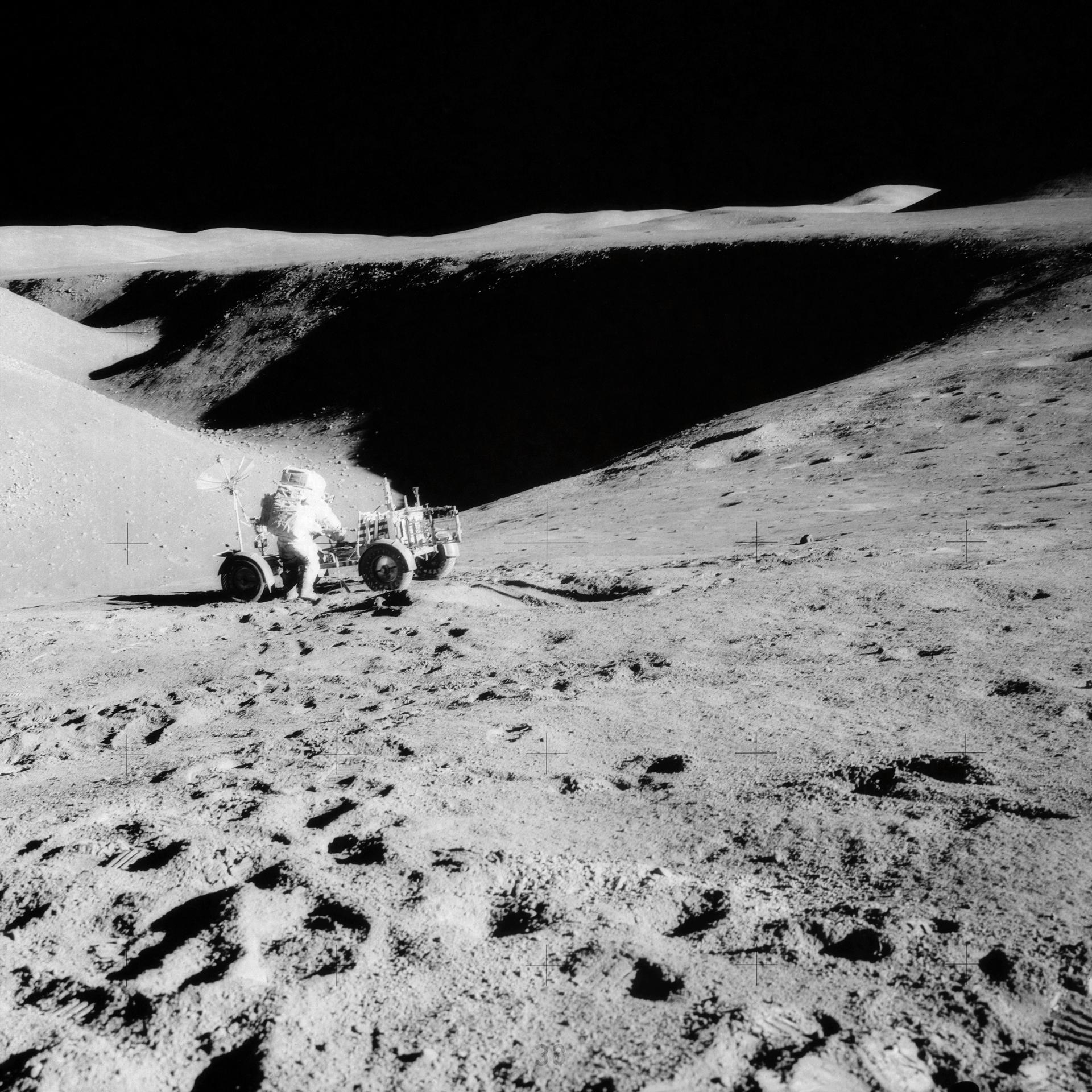
Apollo 15’s folding electric rover carried astronauts, tools, and samples across the Hadley-Apennine landscape.
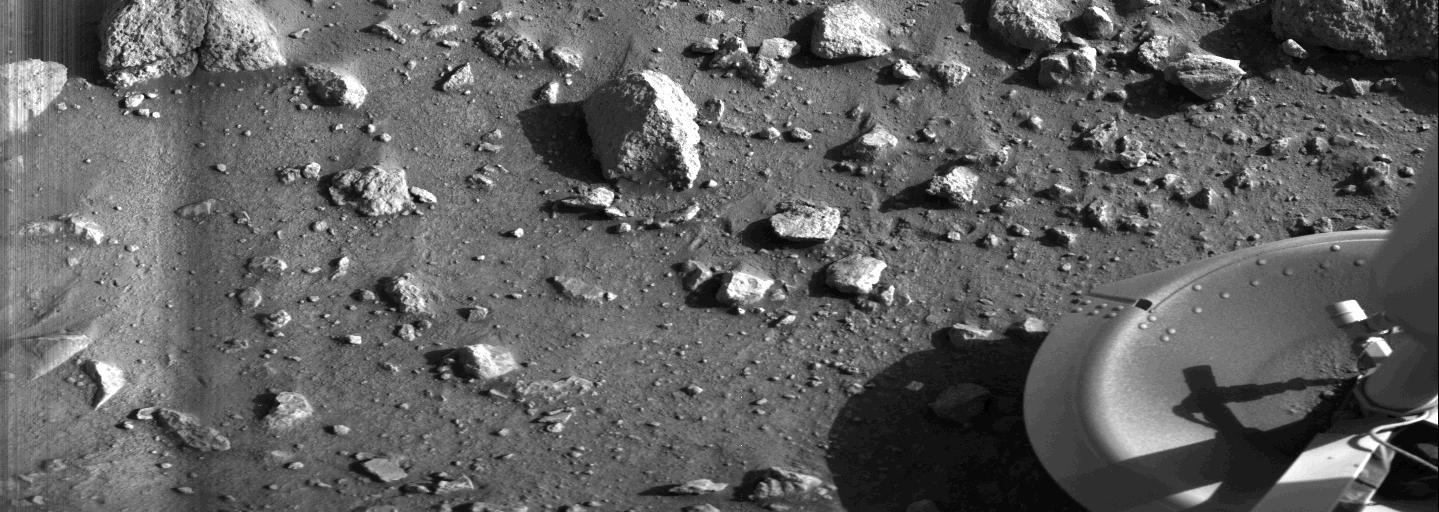
A stationary laboratory that photographed, sampled, and monitored Mars from Chryse Planitia for more than six years.