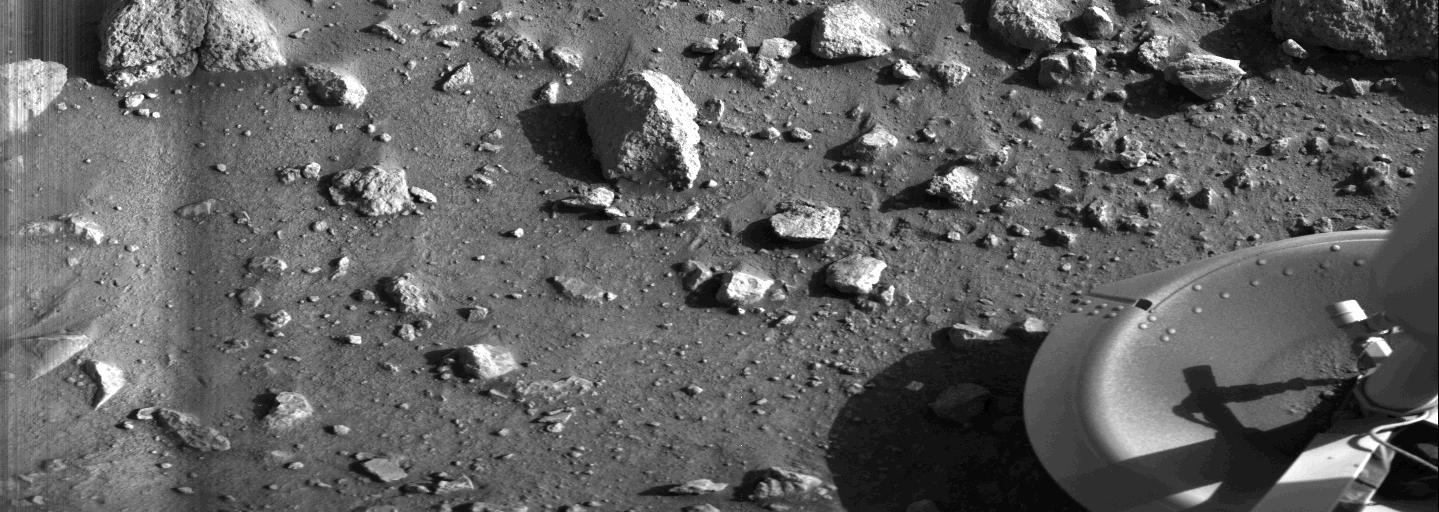
Viking 1
A stationary laboratory that photographed, sampled, and monitored Mars from Chryse Planitia for more than six years.
LandersPhotograph
A 90-day rover that kept exploring for more than fourteen years.
Opportunity landed inside a small crater and began reading Mars like a field geologist. Cameras chose targets; spectrometers examined their chemistry; a grinding tool exposed fresh rock. The rover kept moving long after its planned 90-sol mission, following geological clues from Eagle crater to Endeavour crater until a vast dust storm cut off communication.
Search rocks and soils for evidence of past water, characterize Martian geology and climate, and assess whether ancient environments could have supported life.
Six motorized wheels and a rocker-bogie suspension carried a solar-powered laboratory. Panoramic cameras, spectrometers, a microscope, and an arm-mounted rock abrasion tool let the rover inspect layers and minerals up close.
Found mineral and sedimentary evidence that liquid water once affected rocks in Meridiani Planum.
Investigated older rocks near Endeavour crater that recorded less acidic water conditions with greater potential for habitability.
The second Mars Exploration Rover begins its interplanetary journey.
Airbags carry Opportunity into Eagle crater at Meridiani Planum.
After years of driving, the rover reaches the rim of a much larger and older crater.
A major dust storm blocks sunlight and the solar-powered rover falls silent.
NASA ends the recovery campaign after more than fourteen years of surface exploration.
Historical imagery, with its original context and credits. Select a photograph to look closer.
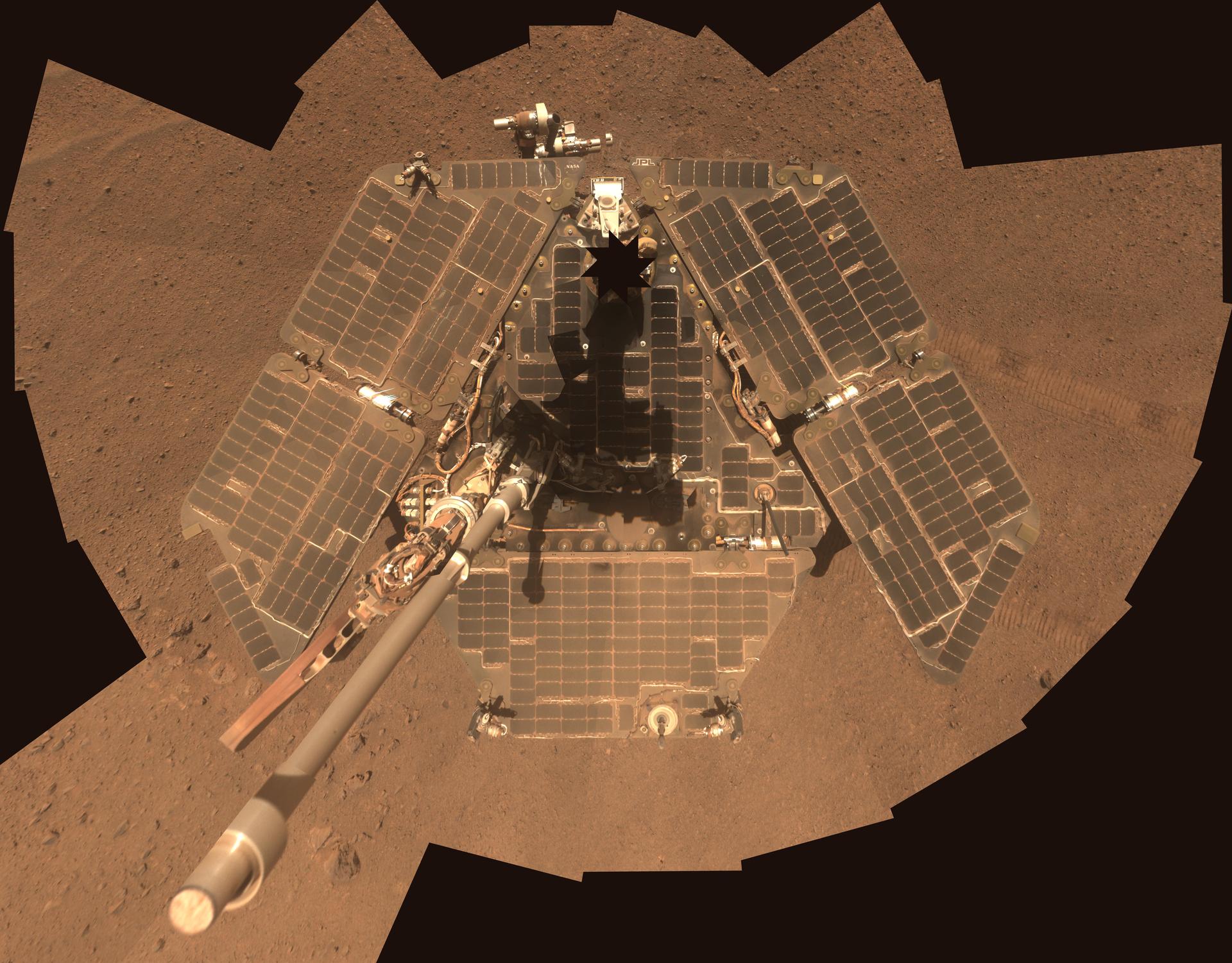
Opportunity self-portrait assembled from Pancam images taken 22–24 March 2014 in approximately true color. The camera mast is absent because of the projection. PIA18079.
NASA / JPL-Caltech / Cornell University / Arizona State UniversityOriginal archive entryEducational wording and data structuring are AI-assisted. The historical and scientific claims above are linked to the records below. No AI-generated media is used.
Supports Opportunity’s scientific story and the distinction between evidence of past water and a present-day ocean.
Drives Opportunity filters, landing-site atlas marker, operation explanation, status, and timeline.
Separates the 2018 last communication from the 2019 mission-complete decision and supports the distance fact.
Primary Opportunity profile image, explicitly identified as a scientific photo mosaic rather than a third-person photograph.
A stationary laboratory that photographed, sampled, and monitored Mars from Chryse Planitia for more than six years.
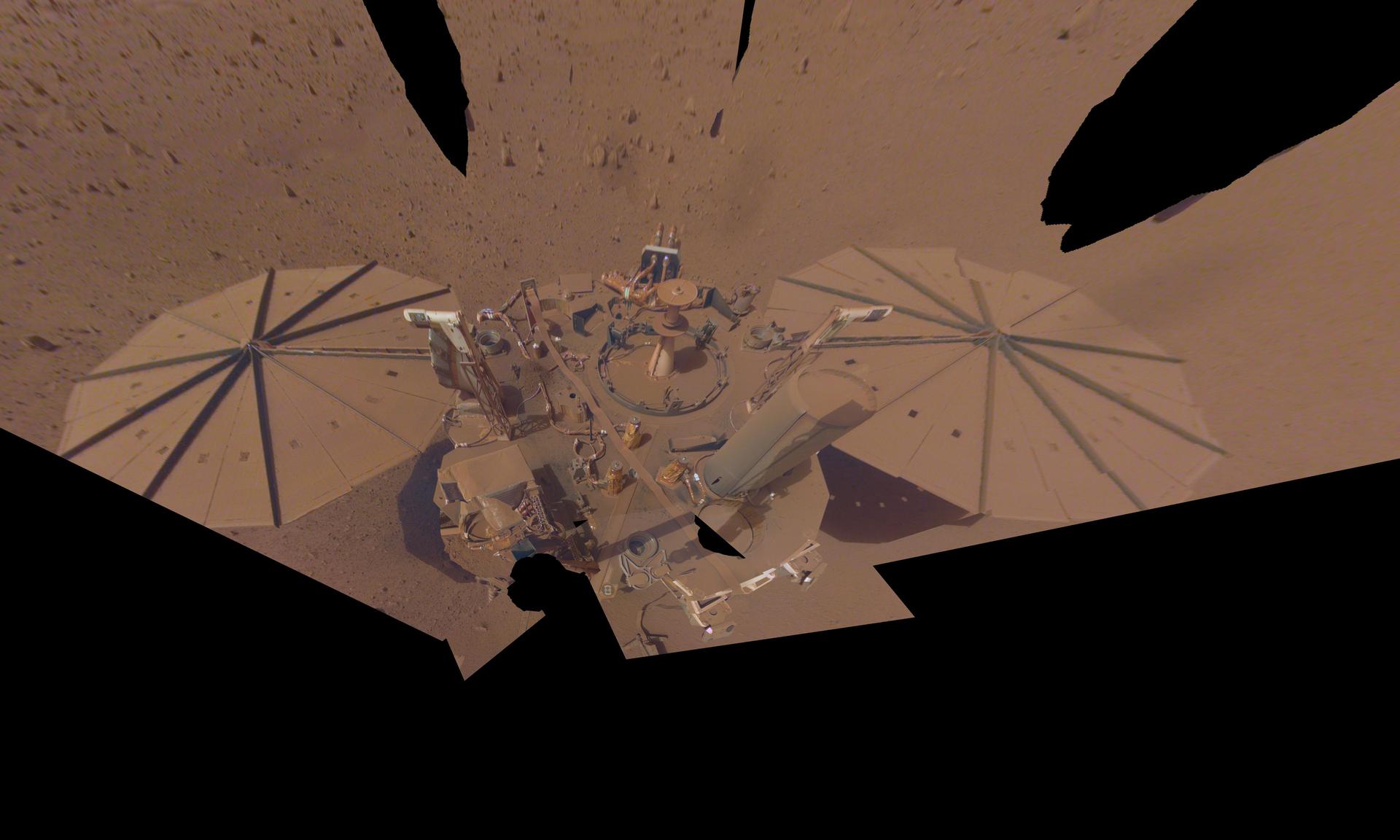
A geophysical station that used marsquakes and radio tracking to reveal the structure inside Mars.
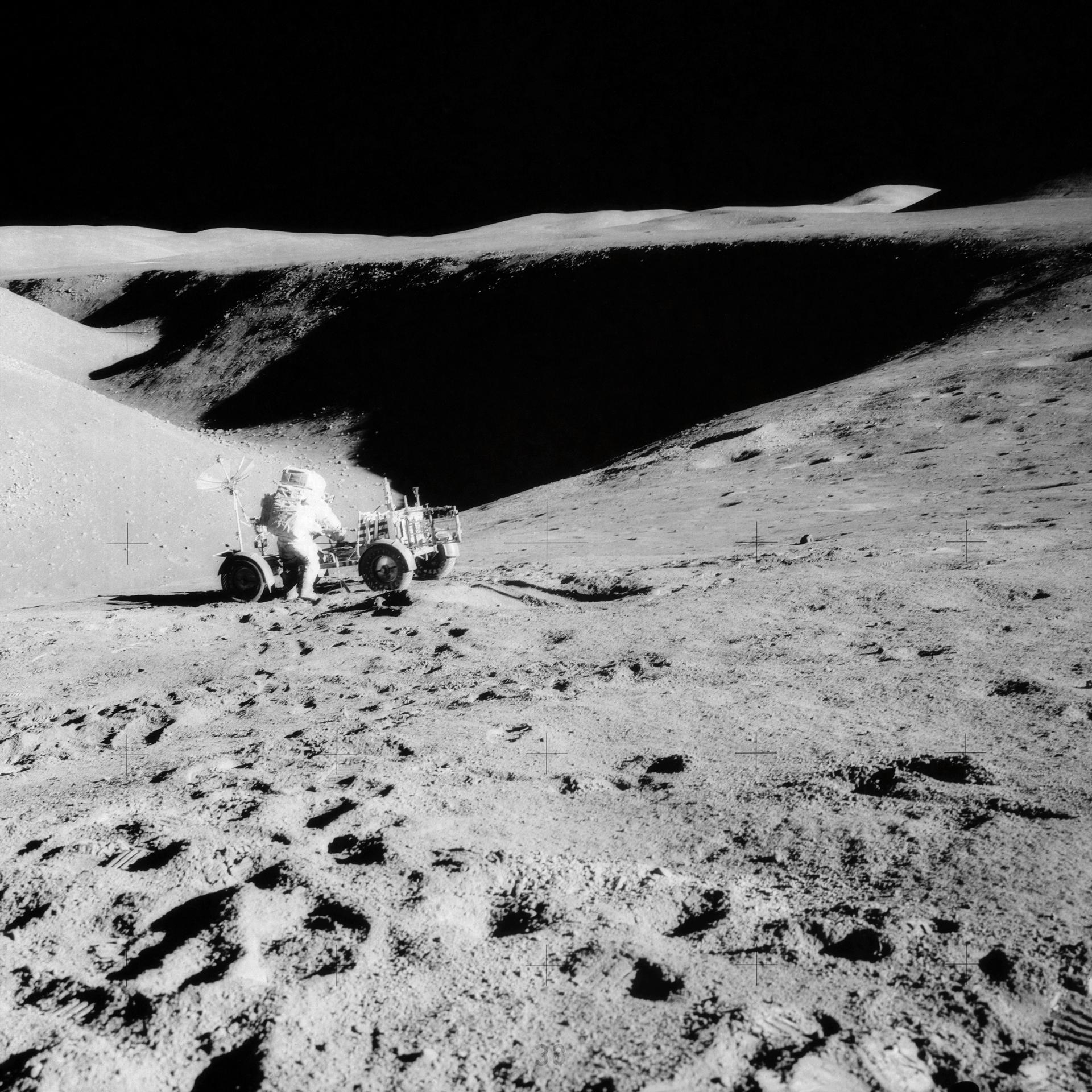
Apollo 15’s folding electric rover carried astronauts, tools, and samples across the Hadley-Apennine landscape.