Eagle descent stage
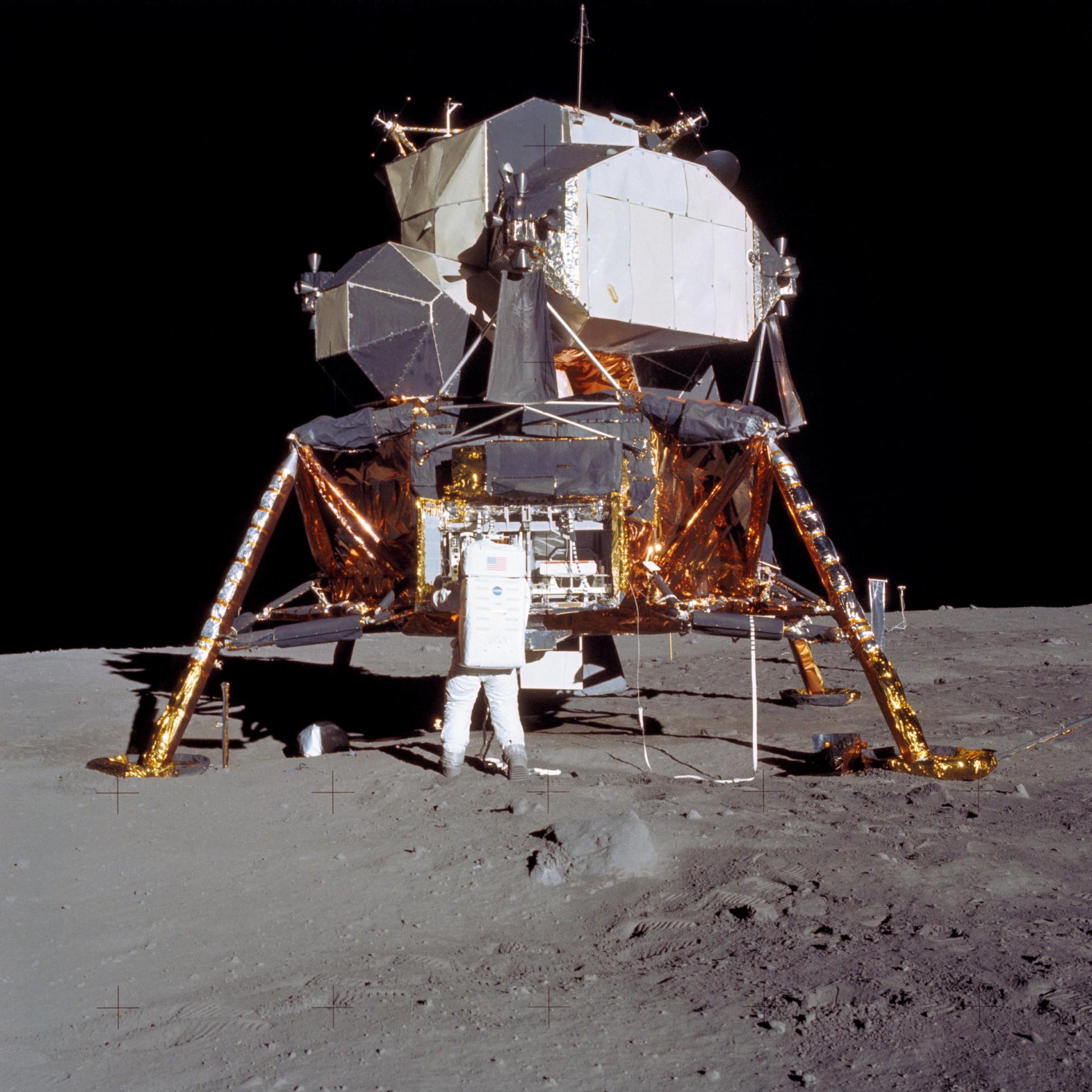
The lower half of Eagle stayed at Tranquility Base after carrying two astronauts safely to the lunar surface.
LandersPhotograph
A silent mirror that can still answer from the Moon.
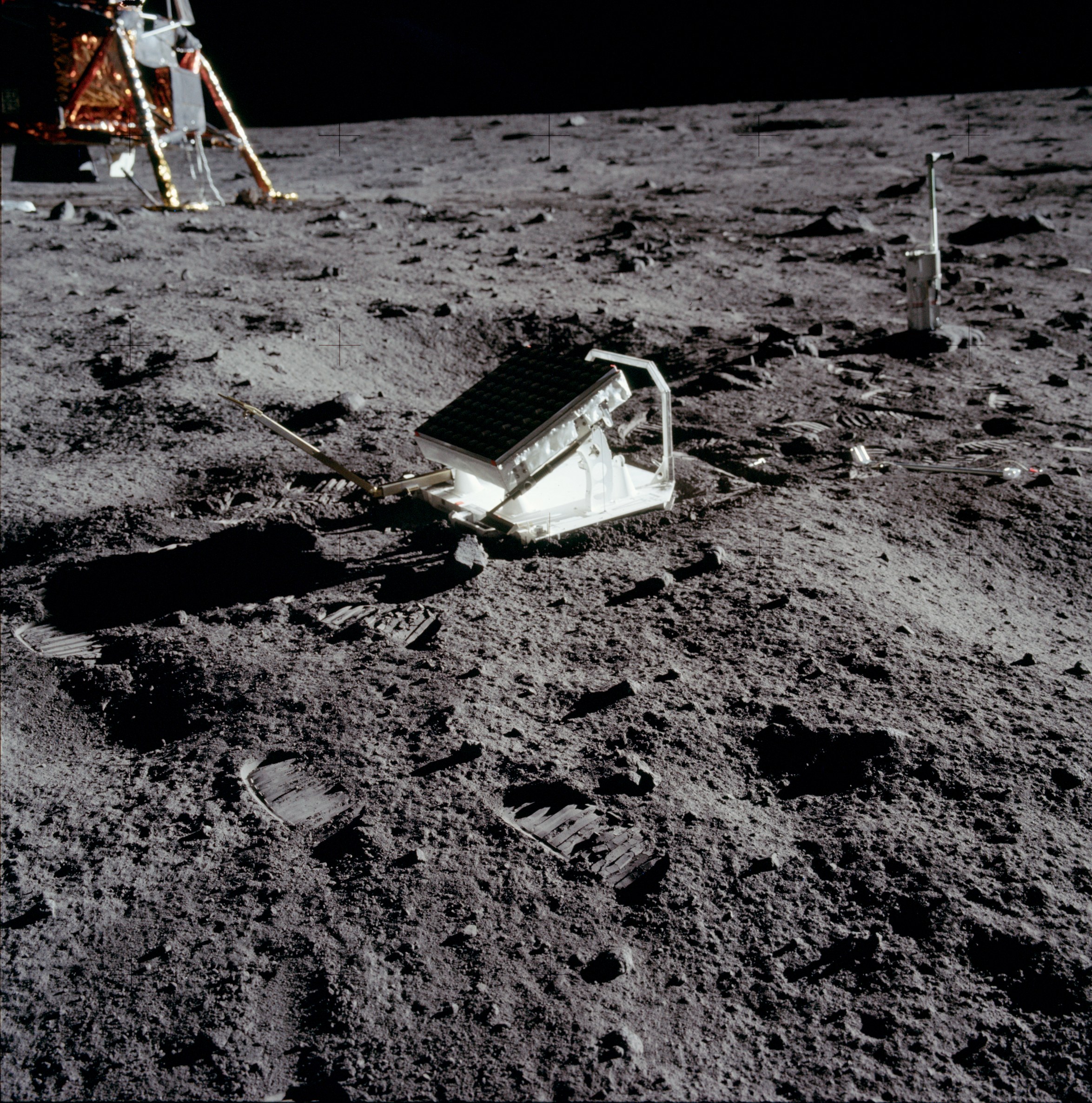
Unlike a rover or lander, the Apollo 11 reflector never needed a radio, battery, or moving part. Astronauts aimed its array toward Earth, where observatories send brief laser pulses to the Moon and time the tiny fraction of light that returns. It is hardware left behind, but its story is not one of simple inactivity: the experiment works whenever researchers illuminate it from Earth.
Provide a stable optical target for measuring the round-trip travel time of laser light between Earth and the Moon.
Corner-cube reflectors return incoming light toward its source over a range of angles. Earth observatories fire laser pulses at the array and time returning photons. The reflector itself requires no electrical power.
Lunar laser ranging lets researchers measure changes in the Earth-Moon distance with extraordinary precision.
Long-running ranging measurements help study lunar motion, Earth’s rotation, gravity, and tests of fundamental physics.
The reflector travels to the Moon with Eagle and the Apollo 11 crew.
Eagle lands with the folded reflector among its surface equipment.
The array is placed and aimed so observatories on Earth can use it as a laser-ranging target.
The International Laser Ranging Service continues to list Apollo 11’s reflector as a current lunar ranging target.
Historical imagery, with its original context and credits. Select a photograph to look closer.
The deployed Apollo 11 Laser Ranging Retroreflector. AS11-40-5952.
NASA Apollo Lunar Surface JournalOriginal archive entryEducational wording and data structuring are AI-assisted. The historical and scientific claims above are linked to the records below. No AI-generated media is used.
Supports Eagle descent-stage dates, purpose, operation, status, and mission timeline.
Positions Eagle and the Apollo 11 reflector at documented coordinates and uses the Apollo 15 LM coordinate only as an approximate mission-site marker for the rover.
Supports the reflector purpose, no-power operation, scientific contributions, status, and learning quiz.
Supports the distinction between hardware left on the Moon and a passive instrument still useful to laser-ranging stations.
Primary profile photograph for the Apollo 11 reflector, downloaded from the journal archive.
The lower half of Eagle stayed at Tranquility Base after carrying two astronauts safely to the lunar surface.
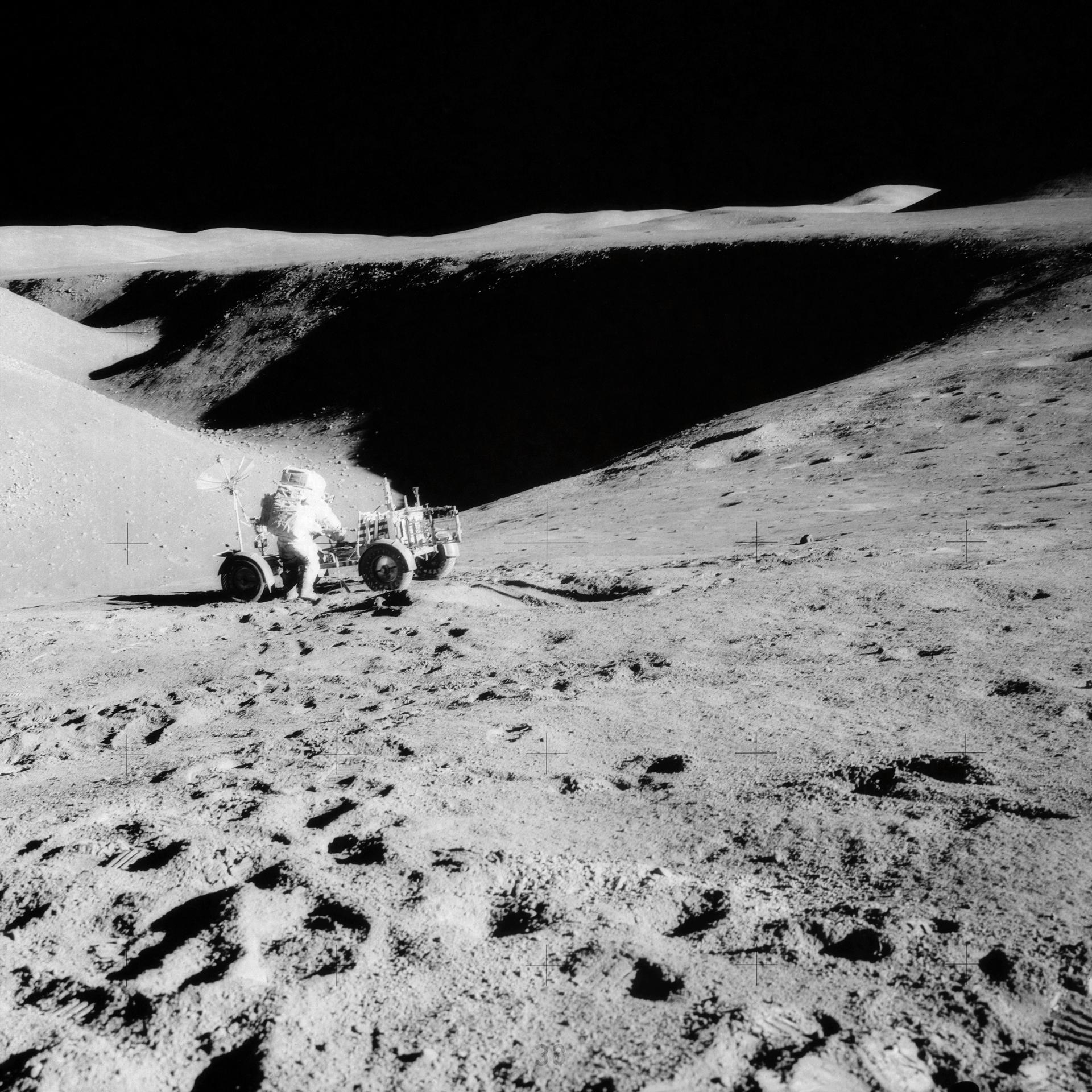
Apollo 15’s folding electric rover carried astronauts, tools, and samples across the Hadley-Apennine landscape.
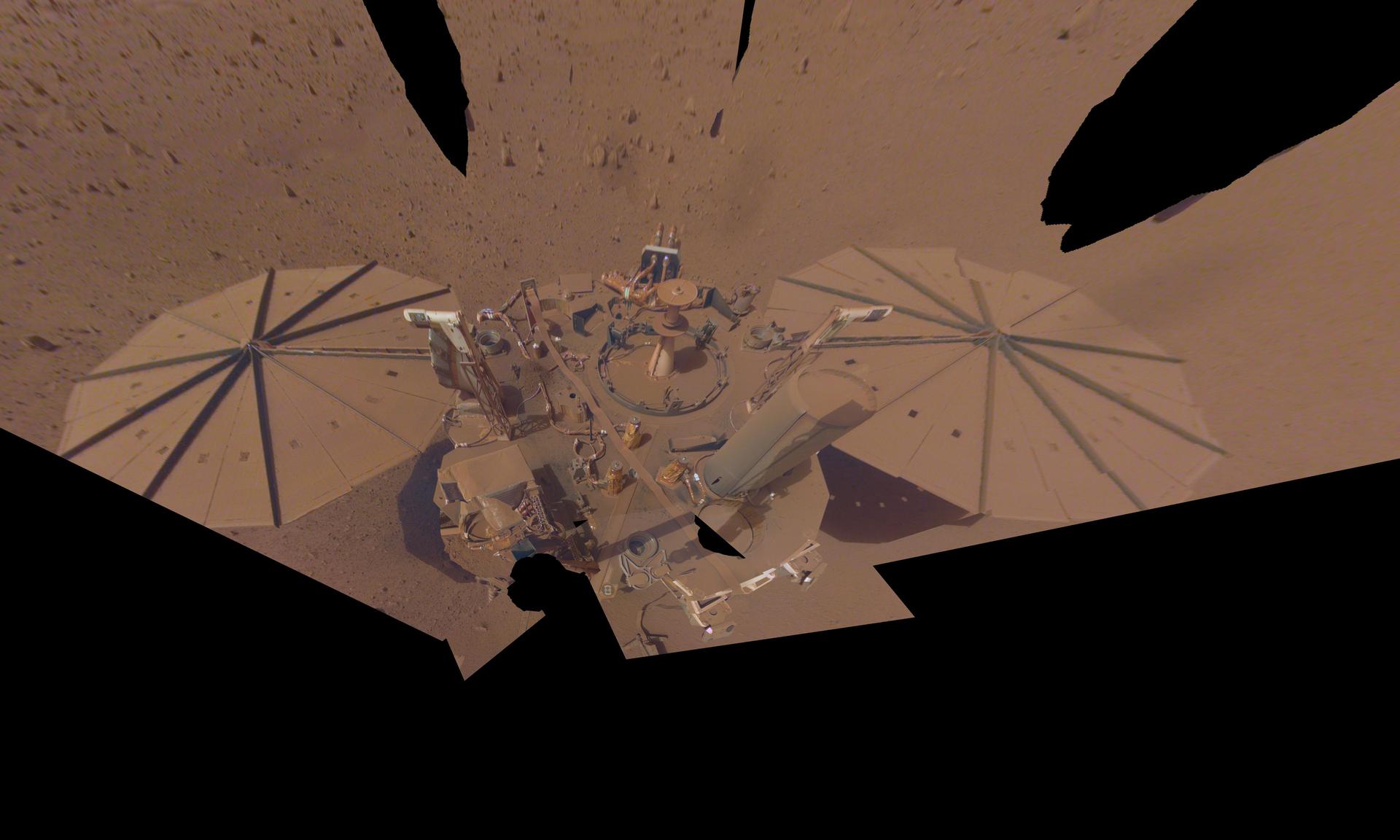
A geophysical station that used marsquakes and radio tracking to reveal the structure inside Mars.